
If a potted plant still looks green on top, it is easy to assume the roots are fine and the answer is more fertilizer, more water, or a new gadget. That is where people often waste money. In container plants, root trouble often shows up late, and the above-soil symptoms can be vague: wilting, yellowing, slow growth, leaf drop, or a plant that still looks presentable but is quietly declining. Root rot, pot-bound roots, poor drainage, compacted mix, and fertilizer salt injury can all create that pattern. (extension.umd.edu)
- A plant can stay green for a while even as the root system loses function from saturation, root binding, or salt injury. (extension.usu.edu)
- If foliage wilts while the potting mix is still wet, adding more water can make the problem worse because damaged roots cannot take up moisture normally. (yardandgarden.extension.iastate.edu)
- Before you buy fertilizer, spray, or a bigger pot, pull the plant from its container and inspect the root ball, the drainage setup, and the condition of the mix. (homegarden.cahnr.uconn.edu)
- The cheapest effective fix is often boring: a drain hole, fresh mix, a right-size pot, and a better watering routine.
- Use the ROOTS Audit below to decide whether the plant needs rescue, repotting, or a spending freeze.
Why the top still looks okay while the roots are struggling
Leaves are a lagging indicator. A plant may keep its canopy looking decent for days or even weeks because it is living off stored moisture and energy, even while the root zone is short on oxygen or losing feeder roots. That is one reason root trouble and nutrient deficiency are often confused. Colorado State notes that dead roots can mimic mineral problems above the soil line, and Maryland and UC IPM both describe root problems as general decline, wilt, yellowing, or weak growth rather than one clean signature symptom. (extension.colostate.edu)
The most common hidden problem is too much water staying around the roots for too long. Saturated mix pushes air out of the root zone, roots lose oxygen, and water uptake falls. That is why a plant can wilt even when the pot is wet. Extension guidance from Utah State, Minnesota, Connecticut, and Iowa State all point to the same basic pattern: wet soil plus wilt often signals a root-health problem, not a thirst problem. (extension.usu.edu)
A second version looks almost opposite. A pot-bound plant can seem healthy on top, but the root mass gets so dense that water runs down the sides or through the pot before the center of the root ball absorbs enough moisture. The University of Maryland notes that pot-bound plants often stay dry in the middle and show browning, tip dieback, or drought stress even though you are watering. (extension.umd.edu)
A third cause is self-inflicted: fertilizer or salt buildup. High soluble salts can burn root tips, reduce water uptake, and create wilting or browning that looks like a watering problem. White crust on the soil or the pot rim is a useful clue, but not the only one. Brown leaf edges, reduced growth, and root dieback can also point to excess salts. (extension.umd.edu)
Use the ROOTS Audit before you buy anything
The ROOTS Audit is simply a triage function for assessing the state of your plants. It is not to be used as a laboratory test; rather, it provides a quick means of eliminating “guess-spending,” allowing you to get an immediate indication of where to focus your attention in order to determine if your plants are going to recover from their current condition. The audit can also serve as a tool for making purchasing decisions regarding plant food supplements, pesticides, grow lights, decorative pots, or new plants.
- R – Read the soil, not the calendar. Push a finger 1 to 2 inches into the mix and, if helpful, lift the pot to compare its weight when wet versus drier. Multiple Extension sources caution that watering on a fixed weekly schedule often leads to too much or too little water. (hort.extension.wisc.edu)
- O – Outlet check. Does the container actually have a drainage hole? Is there water trapped in a saucer, sleeve, or cachepot? Plants in pots without drainage holes, or plants left standing in water, face a much higher risk of root trouble. (extension.illinois.edu)
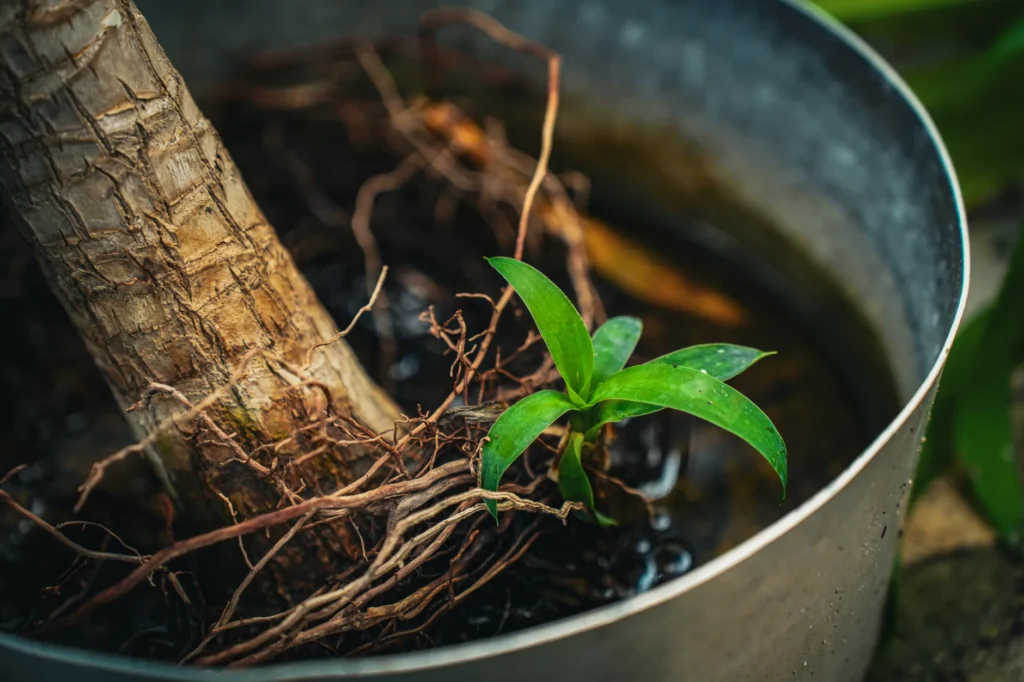
- O – Out-of-pot inspection. Slide the plant out far enough to see the root ball. Healthy roots are generally firm and light-colored; rotted roots are brown to black and soft or mushy; pot-bound roots circle densely around the outside. (extension.unh.edu)
- T – Texture and smell. A sour odor, sticky compacted mix, or a white crust on the surface points toward old wet media or salt buildup. Old, broken-down mix can hold more water and increase rot risk. (yardandgarden.extension.iastate.edu)
- S – Spending freeze. Do not fertilize a stressed plant, do not jump to a much larger pot, and do not assume yellow leaves mean hunger. Overpotting can keep mix wet too long, and fertilizer can worsen root injury when salts are already high. (extension.psu.edu)
Decision table: what the top growth is telling you
| What you see | Likely root issue | What to check today | Best next spend |
|---|---|---|---|
| Wilted leaves but mix is wet | Oxygen-starved or rotting roots | Inspect roots and dump any trapped water | $0 first; buy fresh mix only if roots are still salvageable |
| Water runs straight through the pot | Pot-bound root mass or dry center core | Look for dense circling roots and a dry middle | A slightly larger pot and new mix, not a major upsizing |
| Brown tips and white crust on soil or pot | Salt buildup or fertilizer injury | Leach or replace mix; pause feeding | Usually no fertilizer purchase needed |
| Fungus gnats after watering | Medium staying wet too long | Check drainage hole, cachepot, and dry-down time | Fix the watering setup before buying treatments |
| Yellow lower leaves in a pot that feels wet for days | Too much wet soil around a small root system | Assess pot size, media age, and drainage | Repot to a right-size container if necessary |
A realistic example: $19 fixes versus $58 guesses
Say you have a $32 philodendron sitting in a $20 ceramic cachepot. The top growth still looks decent, but a few lower leaves are yellowing and the plant occasionally wilts. A common reaction is to buy a $12 bottle of fertilizer, an $18 moisture meter, and a $28 decorative replacement pot. That is $58 in new spending, and if the new pot still has no drainage hole, the root problem stays in place.
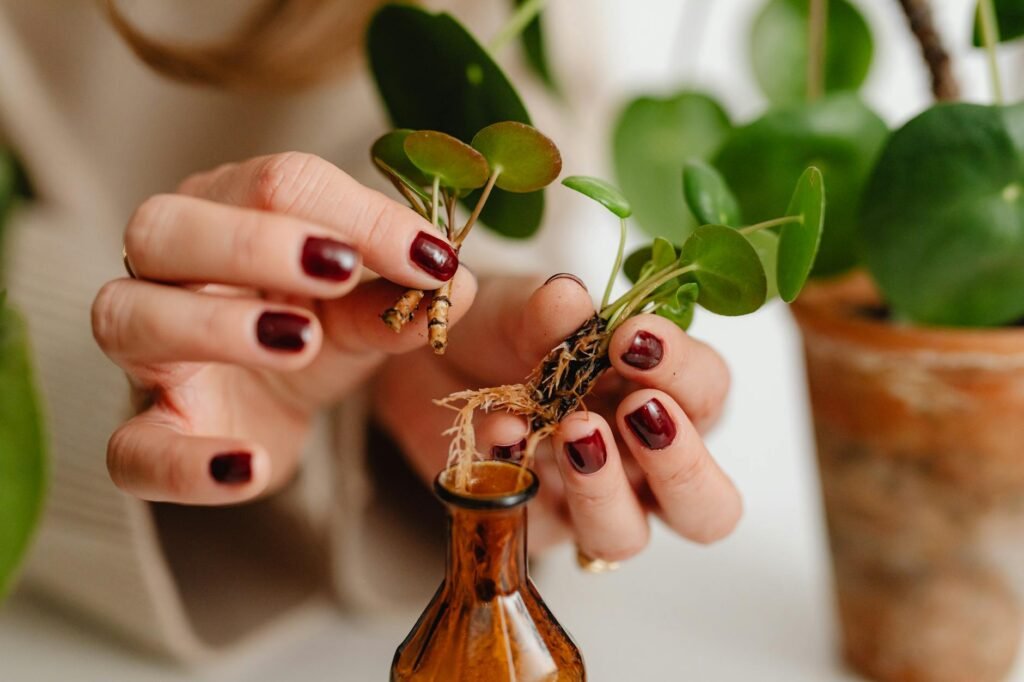
A cheaper path is diagnostic first. Pull the nursery pot out of the cachepot, pour out any standing water, inspect the roots, and repot only if the root ball or mix tells you to. In many cases, the actual shopping list is modest: a bag of fresh potting mix for about $9 and a basic saucer for about $6, or a plain nursery pot with holes for a few dollars more. Even when the plant cannot be saved, the inspection keeps you from layering product after product onto a plant that really needed a root-zone fix. Pots without drainage and oversized containers are both well-documented risk factors for root trouble. (extension.illinois.edu)
What to do in the next 48 hours
- Stop scheduled watering immediately. If the plant sits in a sleeve, saucer, or decorative outer pot, remove any standing water now. (yardandgarden.extension.iastate.edu)
- Take the plant out of the pot and inspect the root ball. You are looking for three broad outcomes: mostly healthy roots, a severely pot-bound root mass, or widespread brown and mushy roots. (extension.unh.edu)
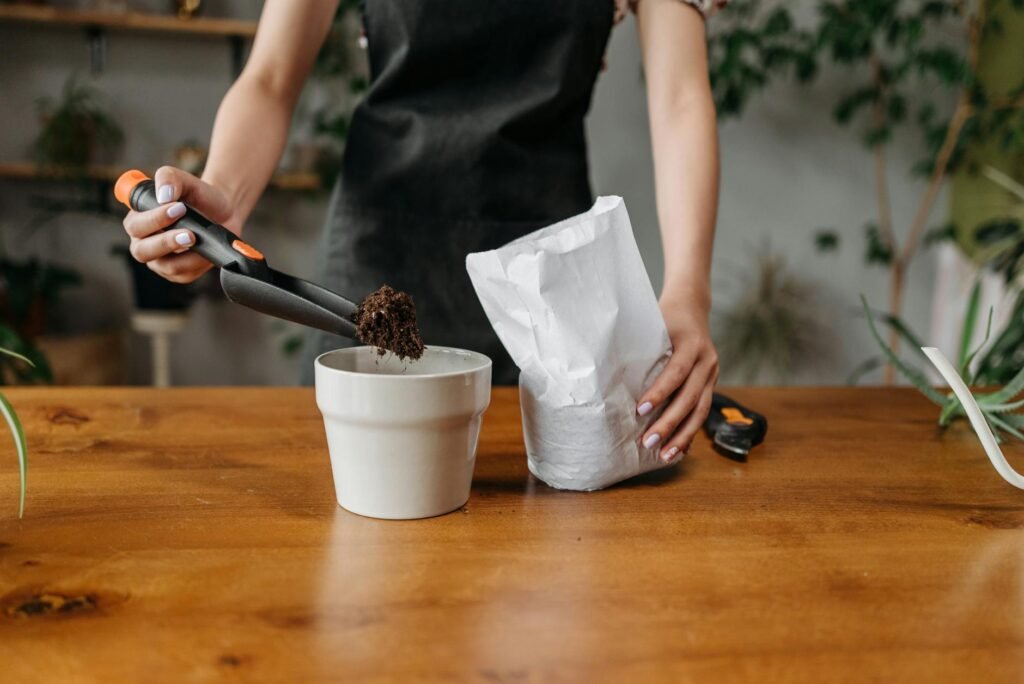
- If roots are damaged, trim off brown, black, dead, or limp roots and repot into a container just large enough to fit the remaining healthy root system. If roots are simply circling, unwind or cut back the circling portion as needed. (homegarden.cahnr.uconn.edu)
- Use fresh, well-drained potting mix. Do not rely on old compacted mix, and do not put gravel or rocks in the bottom to “improve drainage”; Iowa State notes that this can create a wetter zone near the roots. (yardandgarden.extension.iastate.edu)
- Pause fertilizer until the plant is growing normally again. If you see a white crust, either leach the mix thoroughly or replace the mix in smaller pots. (extension.umd.edu)
- Then monitor by soil feel and pot weight instead of habit. Watering should be based on dryness at depth, not on the day of the week. (hort.extension.wisc.edu)
Common mistakes that make root trouble worse
- Watering a wilted plant without checking whether the soil is already wet. Wet-soil wilt often points to root loss, not thirst. (yardandgarden.extension.iastate.edu)
- Leaving the nursery pot inside a decorative container that traps runoff. Standing water around roots is a repeat offender. (extension.illinois.edu)
- Moving from a small pot to a much larger one. Too much extra mix can stay wet too long and raise rot risk. (extension.psu.edu)
- Feeding a stressed plant because yellow leaves look like hunger. Poor root health and salt buildup can mimic deficiency. (ipm.ucanr.edu)
- Ignoring the age and texture of the potting mix. Old compacted media can hold too much water. (yardandgarden.extension.iastate.edu)
- Adding rocks or gravel to the bottom of the pot. That old advice can leave a wetter layer close to the roots instead of solving drainage. (extension.iastate.edu)
When the first plan is not enough
Sometimes the honest answer is that the plant is too far gone. UC IPM notes that once a houseplant problem is advanced, restoring health may not be practical, and Oregon State says there may be very little to do once root rot sets in. If the crown is mushy, the lower stem is blackening, or most roots are gone, repotting may be more about confirming the diagnosis than saving the plant. (ipm.ucanr.edu)
- Take a financial triage approach. If the species can be propagated from a healthy cutting or offset, that may make more sense than continuing to buy rescue products.
- Discard old potting mix and drained water if root rot is involved. Do not reuse either around healthy plants. (extension.umd.edu)
- Use a clean pot or disinfect the old one before reusing it. Clean containers and disease-free potting media are standard prevention advice. (extension.umd.edu)
- If the plant is expensive or sentimental and you suspect disease, get local Extension or professional help before using fungicides. Illinois notes that not all fungicides control root-rot pathogens. (extension.illinois.edu)
How to verify you actually fixed it
- Mark the day you watered and note how heavy the pot feels right after watering. This gives you a baseline for the next dry-down cycle.
- Check the mix every few days 1 to 2 inches down instead of watering automatically. If it stays wet too long, revisit pot size, drainage, or media texture. (hort.extension.wisc.edu)
- Confirm that water exits the drain hole and that no runoff is left sitting in an outer pot or saucer. (extension.illinois.edu)
- Watch whether new symptoms keep spreading. If roots now look sound but decline continues, widen the diagnosis to light, pests, temperature swings, or salt buildup. (ipm.ucanr.edu)
- If you are still unsure, contact your local Cooperative Extension office or a trusted nursery and bring photos of the roots, the pot, and the full plant. A root photo is often more useful than a leaf photo alone. (extension.psu.edu)
Bottom line
When a plant looks healthy on top but is failing at the roots, the expensive mistake is treating the leaves first. Check moisture at depth, drainage, pot size, root condition, and salt buildup before you buy anything. In many cases, the right answer is not a miracle product. It is a plain pot with holes, fresh mix, and a better watering routine. (extension.umd.edu)
Frequently Asked Questions
Can roots be failing if the leaves still look green?
Yes. Above-soil symptoms often lag behind root damage. A plant can stay fairly green while roots are rotting, oxygen-starved, or tightly pot-bound, then decline quickly once enough root function is lost. (extension.umd.edu)
If the plant is wilted, should I water it right away?
Not until you check the mix. Wilt in dry soil and wilt in wet soil can mean opposite things. If the mix is still moist, more water can worsen root damage. (yardandgarden.extension.iastate.edu)
Should I move a struggling plant into a much larger pot?
Usually no. Repot only slightly larger, or even the same size if you had to trim damaged roots. Oversized containers keep extra mix wet longer and can increase root-rot risk. (extension.psu.edu)
Do I need a moisture meter to get this right?
Not usually. Extension guidance commonly recommends the finger test and paying attention to pot weight instead of watering on a schedule. A meter is optional, not essential. (hort.extension.wisc.edu)
Can fertilizer fix a plant that stopped growing?
Only if lack of nutrients is the real problem, and many root issues look similar to deficiency. If salts are already high or roots are damaged, feeding can make things worse. (ipm.ucanr.edu)
Can I reuse the old potting mix after root rot?
That is a bad bet. Maryland and Wisconsin both advise against reusing contaminated potting mix or drainage water because they can harbor root-rot organisms. (extension.umd.edu)
References
- University of Maryland Extension: Root Rots of Indoor Plants – https://extension.umd.edu/resource/root-rots-indoor-plants
- University of Maryland Extension: Pot-Bound Indoor Plants – https://extension.umd.edu/resource/pot-bound-indoor-plants
- Penn State Extension: Repotting Houseplants – https://extension.psu.edu/repotting-houseplants
- Wisconsin Horticulture: Houseplant Care – https://hort.extension.wisc.edu/articles/houseplant-care/
- Iowa State University Extension and Outreach: Why is my houseplant wilting? – https://yardandgarden.extension.iastate.edu/faq/why-my-houseplant-wilting
- University of Maryland Extension: Fertilizer Toxicity or High Soluble Salts in Indoor Plants – https://extension.umd.edu/resource/fertilizer-toxicity-or-high-soluble-salts-indoor-plants/
- UC IPM: Houseplant Problems – https://ipm.ucanr.edu/home-and-landscape/houseplant-problems
- Illinois Extension: Get Started | Houseplants – https://extension.illinois.edu/houseplants/get-started
- University of Minnesota Extension: Watering houseplants – https://extension.umn.edu/yard-and-garden-news/watering-houseplants
- UConn Home & Garden Education Center: Ailing Houseplants – https://homegarden.cahnr.uconn.edu/factsheets/ailing-houseplants/
- Iowa State University Extension and Outreach: Diagnosing Houseplant Problems Related to Poor Culture – https://yardandgarden.extension.iastate.edu/how-to/diagnosing-houseplant-problems-related-poor-culture