
TL;DR
- Spring and summer are the main growth window for many houseplants, but longer days alone do not guarantee indoor growth. Light intensity, root health, watering, temperature, and pests still determine whether a plant actually puts out new leaves. (extension.umn.edu)
- The most expensive common mistake is treating every stall with more fertilizer or a bigger pot. Both can make a stressed plant worse if the real problem is low light, soggy roots, or salt buildup. (extension.umd.edu)
- Use the GROWTH Audit in this article before you buy anything: Gauge light, Review roots, Oxygen and moisture, Watch feeding, Temperature, Hidden pests. (extension.umd.edu)
- If you fix the right bottleneck, growth often resumes without a shopping spree. If you fix the wrong one, you usually just add stress. (extension.umd.edu)
A houseplant that looks frozen in June can make you feel like you are doing everything wrong. In reality, active-season stalls are usually narrow problems, not a total care failure. Many indoor plants wake up in spring and summer, but they still need enough usable light, healthy roots, workable moisture, and stable temperatures to turn that season into visible growth. (extension.umn.edu)
That matters because random fixes cost money and often backfire. A larger pot can stay wet too long. More fertilizer can add salts. A new grow light may be unnecessary if the plant is simply root-bound or sitting in stale mix. The goal is not to do more. The goal is to identify the one or two bottlenecks that are actually stopping growth. (extension.umn.edu)
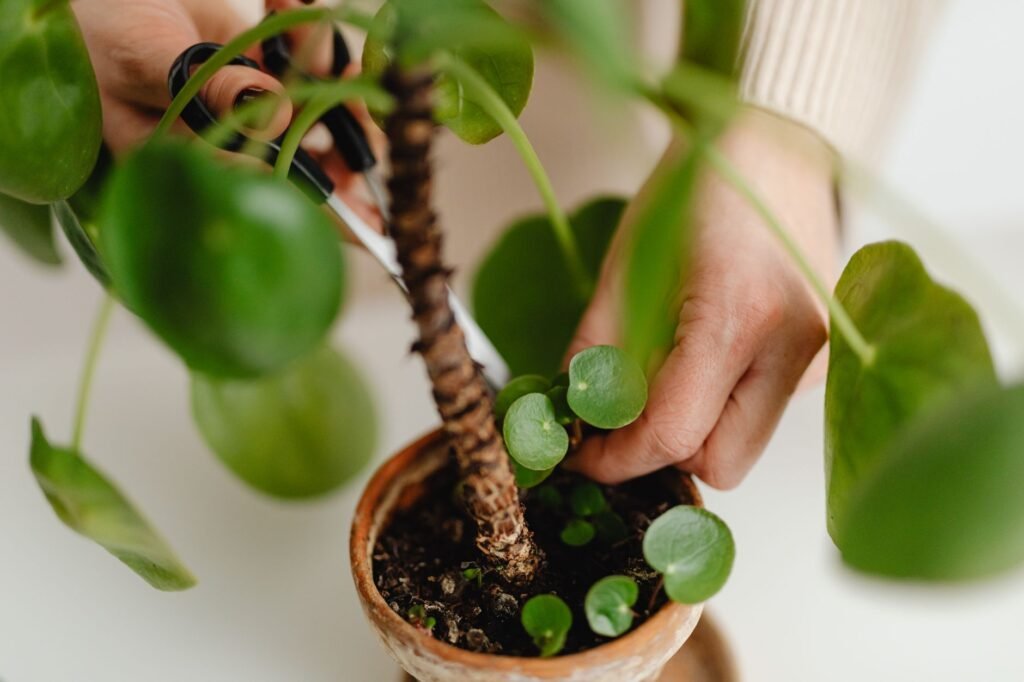
Start with the GROWTH Audit
Before purchasing any supplies, please look over this original scorecard and give each category a value of 0 if it is fine; 1 if it may be contributing; and 2 if it is clearly a problem. Work to correct the highest scoring category first in order to avoid modifying three variables simultaneously, resulting in losing track of what worked.
- G – Gauge light. If the plant is farther from the window than it was before, or the room is simply dim, growth can stall because light intensity drops quickly with distance. (extension.umd.edu)
- R – Review roots. Roots poking out of drainage holes, circling the pot, or causing water to run straight through are classic signs of a pot-bound plant. (extension.umd.edu)
- O – Oxygen and moisture. Overwatering reduces oxygen around fine roots, while severely dry mix can repel water and leave the root ball dry in the middle. (extension.umd.edu)
- W – Watch feeding. Indoor plants need some nutrition during active growth, but excess fertilizer can burn roots and build up salts that also suppress growth. (extension.umn.edu)
- T – Temperature and transition stress. Many foliage plants grow best around 70 to 80 degrees F during the day and 60 to 68 at night; drafts, hot glass, and sudden changes can interrupt growth. (extension.umd.edu)
- H – Hidden pests. Spider mites, mealybugs, whiteflies, and scale often show up on already stressed plants and can stunt growth before the damage looks dramatic. (extension.umn.edu)
Why growth stalls when the calendar says it should not
1. The room is brighter than winter, but still too dim for that plant
This is the most common reason a plant stops moving in active season. Indoor light is not just about the month or window direction. It is also about distance from the window, screens, curtains, nearby trees, and where the plant sits in the room. University guidance notes that light intensity falls rapidly as the light source gets farther away, and low-light conditions slow growth and reduce water use. (extension.umd.edu)
Look for small new leaves, long gaps between leaves, leaning stems, or a plant that simply maintains old foliage without producing fresh growth. Before you buy a grow light, try the cheapest test first: move the plant to the brightest location that suits its species, then watch it for two weeks. Clean dusty leaves too, since cleaner leaves photosynthesize more efficiently. (extension.umn.edu)
2. The roots have run out of room
A plant can stop growing because the top looks fine while the root ball is packed tight. Pot-bound plants often have roots circling the pot, roots emerging from drainage holes, and water that rushes through so quickly that the middle of the root ball stays dry. The result can look confusing: brown tips, wilting, or stalled growth even though you are watering regularly. (extension.umd.edu)
If roots are crowded, repot only one size up rather than jumping to a very large container. Penn State and Wisconsin guidance both warn against oversized pots because extra mix can hold too much water around the roots. If you do not want a bigger plant, you can refresh the mix and lightly trim the outer roots instead of upsizing the container. (extension.psu.edu)
3. Watering is wrong for the season, the pot, or the mix
A plant in active season usually uses more water than it did in winter, but that does not mean it wants a fixed Sunday schedule. University of Maryland notes that excess moisture reduces oxygen in the soil and damages fine roots, while pot type, media, humidity, and temperature all change how fast a plant dries. That is why overwatered plants often look thirsty: the roots are too damaged to take up water properly. (extension.umd.edu)
Use the soil and the pot as your signal, not the calendar. Check the top inch, lift the pot to learn its dry versus watered weight, and empty saucers after watering. If the mix has pulled away from the pot or become hard and crusty, rehydration may take more than one slow watering or a full refresh of the potting mix. (extension.umn.edu)
4. The potting mix is tired, compacted, or loaded with salts
Houseplants do need nutrients during active growth, but fertilizer is not a substitute for light or root health. University of Maryland advises that the goal is simply to replace what the plant uses, not to force fast growth. Too much fertilizer or overly concentrated feed can leave white crusts on the mix or pot, damage roots, and show up as brown tips, wilting, lower leaf drop, or reduced growth. (extension.umd.edu)
If you see salt residue, flush the potting mix from the top with clear water and let it drain fully. If the problem is severe, replace the mix. If there is no sign of salts and the roots look healthy, restart feeding lightly rather than heavily. Minnesota guidance suggests beginning with a balanced houseplant fertilizer at half strength during the active season. (extension.umd.edu)
5. Temperature, drafts, or summer stress are interrupting growth
Not every summer room is plant-friendly. University of Maryland says excessively low or high temperatures can stop growth, cause spindly growth, trigger leaf drop, or lead to plant failure. For many foliage houseplants, the comfortable range is about 70 to 80 degrees F in the day and 60 to 68 at night. Air-conditioning vents, hot south-facing glass, fireplaces, exterior doors, and cold night windows can all push a plant out of that range. (extension.umd.edu)
Low humidity can add stress, especially for tropical plants, but misting is usually a weak solution because the humidity bump does not last long. If the plant is already in suitable light and moisture, moving it away from drafts or adding a room humidifier is usually more useful than constant spraying. (extension.psu.edu)
6. Hidden pests are draining energy before the plant can grow
Spider mites, mealybugs, scale, aphids, and whiteflies can all slow a plant down. Minnesota Extension notes that plants already struggling with too little light or poor watering are less able to resist pests. Look under leaves and along stems for fine webbing, sticky honeydew, cottony patches, or stationary bumps that look like part of the stem. Severe spider mite feeding alone can stunt growth. (extension.umn.edu)
A realistic, money-smart example
Consider a composite example: a renter moves a pothos from 18 inches beside an east window to a bookshelf about 7 feet away in late May. Growth stops. She responds by buying fertilizer spikes and watering every Sunday, but the plant still does not move. Under the GROWTH Audit, the likely problem is light first, with watering and salt buildup as secondary issues. The low-cost reset is to move the plant back to brighter light, flush the mix, and wait before buying more products. If the roots later prove crowded, a $7 nursery pot and $9 bag of mix are more rational than a $48 decorative pot. And if she eventually adds a 20-watt LED bulb for 14 hours a day, that uses about 8.4 kWh a month, or roughly $1.34 monthly at an assumed electric rate of $0.16 per kWh. (extension.umd.edu)
Decision table: what to check before you spend money
| What you see | Most likely issue | Check today | Best spending move |
|---|---|---|---|
| No new leaves, long internodes, leaning toward the window | Too little light | Move to the brightest suitable spot and clean the leaves | Wait on fertilizer; consider a grow light only if brighter placement still does not help. (extension.umd.edu) |
| Water races through, roots visible, plant dries fast | Pot-bound roots | Slide the plant out and inspect the root ball | Repot one size up or refresh mix and root-prune lightly if you want to keep the same size. (extension.umd.edu) |
| Yellow inner leaves, wilt despite damp mix, mushy roots | Overwatering or root rot | Stop calendar watering and inspect roots and drainage | Do not buy fertilizer; improve drainage or repot into fresh, airy mix. (extension.umd.edu) |
| Brown tips and white crust on soil or pot | Salt buildup or overfertilizing | Flush from the top with clear water | Pause feeding and replace mix if crusting returns. (extension.umd.edu) |
| Fine webbing, sticky residue, cottony patches | Pests | Inspect stems and leaf undersides with a flashlight | Isolate first and treat early rather than buying more fertilizer. (extension.umn.edu) |
| Plant sits near a vent, hot glass, or exterior door | Temperature or humidity stress | Check location before changing feed or pot size | Move the plant first; a humidifier is usually more useful than repeated misting. (extension.umd.edu) |
The 14-day active-season reset
- Move the plant into the best light that fits its species. If you use an LED grow light, keep foliage plants roughly 12 to 24 inches away unless the manufacturer says otherwise. (extension.umn.edu)
- Stop watering by weekday. Check the top inch of mix, the weight of the pot, or a wooden dowel for large containers. (extension.umn.edu)
- Water thoroughly, then empty the saucer. Roots sitting in water are more likely to decline. (extension.umn.edu)
- Inspect the root ball once. If roots are circling heavily, repot into a container only slightly larger and use a soilless indoor potting mix, not garden soil. (extension.umd.edu)
- Feed only lightly, and only after roots are healthy and the plant is in reasonable light. Starting gently is safer than trying to force growth. (extension.umn.edu)
- Rinse or wipe dusty leaves and inspect underneath them for pests. This helps both photosynthesis and diagnosis. (extension.umn.edu)
- Stabilize the environment. Move the plant away from AC blasts, hot glass, and other temperature swings. (extension.umd.edu)
- After 14 days, reassess. If the plant is drying faster, holding leaves better, or showing a fresh node or spear, stay the course instead of changing everything again.
Common mistakes that keep a plant stuck
- Fertilizing a plant that is actually root-rotted or badly overwatered. Damaged roots cannot use extra feed well. (extension.umd.edu)
- Jumping to a huge pot. Too much extra mix can stay wet and raise rot risk. (extension.umn.edu)
- Using garden soil indoors. It is usually too dense and can worsen drainage and pest or disease issues. (extension.umd.edu)
- Watering on a fixed schedule instead of checking the mix. Pot type, temperature, humidity, and plant size all change water needs. (extension.umd.edu)
- Relying on misting as the main humidity fix. The humidity increase is brief. (extension.psu.edu)
- Assuming every stalled plant needs more sun. Too much direct light can scorch leaves, especially if the plant is moved too suddenly. (extension.umd.edu)
When the usual fix is not enough
Some stalls are not quick fixes. If the roots are brown or black and mushy, or the crown is collapsing, the plant may already be in active rot. If pest pressure is heavy, repeated treatment and isolation are often necessary. Plants that were recently moved outside, brought back in, or shifted abruptly from one room to another can also pause while they acclimate. (extension.umd.edu)
This is also where patience matters. Not every healthy plant adds visible size every week. If the plant is stable, the leaves look sound, and there is no pest or root crisis, avoid piling on fixes. Stabilize care for a month before deciding the plan failed. If you still cannot diagnose the issue, a local Cooperative Extension office or a reputable independent garden center is a better next stop than another impulse purchase. (extension.psu.edu)
How to verify that your diagnosis is correct
- Take a baseline photo from the same angle on day 1, day 7, and day 14.
- Mark one growth point, vine tip, or leaf sheath so you can tell whether it is actually moving.
- Log how many days it takes for the pot to dry between waterings. Better light often increases water use, while low light slows it. (extension.umn.edu)
- Check leaf undersides with a flashlight twice during the test window so you do not miss early pests. (extension.umn.edu)
- If nothing changes after four to six weeks in active season, rerun the GROWTH Audit and inspect the root ball and potting mix before you buy another product.
Bottom line
When a houseplant stops growing in spring or summer, think bottleneck, not failure. Most stalls come down to one of six issues: not enough light, crowded roots, poor watering, tired or salty mix, environmental stress, or hidden pests. Diagnose first, spend second, and you will solve more problems with fewer products. (extension.umd.edu)
FAQ
Should I fertilize a houseplant that is not actively growing?
Usually not at first. Confirm that the plant has healthy roots and enough light, then restart feeding lightly when you see new growth. Too much fertilizer on a stressed plant can add salts and reduce growth further. (extension.umn.edu)
How can I tell if my plant is root-bound without hurting it?
Look for roots at the drainage holes, water that rushes straight through, or a pot that dries unusually fast. Then slide the plant out gently and check whether roots are circling the outside of the root ball. (extension.umd.edu)
Does moving a plant closer to a window really make that much difference?
Yes. Extension guidance says light intensity drops rapidly as a plant gets farther from the light source. A plant in the same room can still be in the wrong light zone. (extension.umd.edu)
Can a bigger pot fix stalled growth by itself?
Only if root crowding is the actual problem. If you move a plant into a pot that is too large, the extra mix can stay wet too long and increase rot risk. (extension.umn.edu)
Why did my plant stop growing right after I moved it outside or back indoors?
Sudden changes in light and temperature can cause stress, including yellowing, leaf drop, or a pause in growth. Acclimate gradually instead of making a hard switch. (extension.umn.edu)
References
- University of Minnesota Extension: Spring houseplant care – https://extension.umn.edu/houseplants/spring-houseplant-care
- University of Minnesota Extension: Lighting for indoor plants and starting seeds – https://extension.umn.edu/planting-and-growing-guides/lighting-indoor-plants
- University of Maryland Extension: Lighting for Indoor Plants – https://extension.umd.edu/resource/lighting-indoor-plants/
- University of Maryland Extension: Pot-Bound Indoor Plants – https://extension.umd.edu/resource/pot-bound-indoor-plants
- University of Maryland Extension: Overwatered Indoor Plants – https://extension.umd.edu/resource/overwatered-indoor-plants
- University of Maryland Extension: Root Rots of Indoor Plants – https://extension.umd.edu/resource/root-rots-indoor-plants
- University of Maryland Extension: Temperature and Humidity for Indoor Plants – https://extension.umd.edu/resource/temperature-and-humidity-indoor-plants
- University of Minnesota Extension: Managing insects on indoor plants – https://extension.umn.edu/product-and-houseplant-pests/insects-indoor-plants
- University of Minnesota Extension: Twospotted spider mites in home gardens – https://extension.umn.edu/yard-and-garden-insects/spider-mites
- University of Maryland Extension: Fertilizer Toxicity or High Soluble Salts in Indoor Plants – https://extension.umd.edu/resource/fertilizer-toxicity-or-high-soluble-salts-indoor-plants
- University of Maryland Extension: Mineral and Fertilizer Salt Deposits on Indoor Plants – https://extension.umd.edu/resource/mineral-and-fertilizer-salt-deposits-indoor-plants
- University of Maryland Extension: Fertilizer for Indoor Plants – https://extension.umd.edu/resource/fertilizer-indoor-plants