
Once that mistake is made, the symptoms often get misdiagnosed. People add fertilizer, water more often, or blame humidity. But weak, stretched growth is often a light problem first. University sources note that indoor light drops quickly with distance, and plants grown below their needs may stretch, produce smaller or paler leaves, lose color, and slow down. (extension.umd.edu)
TL;DR
- “Low light” usually means tolerance, not ideal performance. Many plants survive there but will not stay dense, colorful, or fast-growing. (extension.umn.edu)
- Leggy growth is a classic low-light warning sign: longer stems, wider gaps between leaves, weaker growth, and a plant that leans toward the light source. (extension.umaine.edu)
- A shelf more than 8 to 10 feet from an average window is often beyond what even low-light-tolerant plants can use well without help. (extension.missouri.edu)
- The cheapest fix is usually placement, not fertilizer: move the plant, measure the spot, and only then consider a grow light. (extension.illinois.edu)
- If natural light is limited, supplemental light can work well when used close enough to the plant and for roughly 12 to 16 hours a day, with a dark rest period. (extension.arizona.edu)
The myth is simple: low light is a tolerance label, not a goal
This is the core misunderstanding. A tag that says low light usually means a plant can tolerate weaker conditions than a sun-loving plant. It does not mean that dim placement is where the plant will look its best. University guidance repeatedly notes that plants may survive in lower light but need more light for denser foliage, stronger color, and better flowering. That difference between survive and thrive is where the disappointment starts. (extension.umn.edu)
The exact number attached to “low light” varies by source. Some extension guides describe it around 25 to 100 foot-candles, while others use broader ranges that can extend higher depending on the plant group and the way the light is measured. The practical message, though, barely changes: low light is still meaningful daylight, usually near a north window or farther back from brighter windows, and it is heavily affected by distance, curtains, insect screens, tree shade, overhangs, nearby buildings, and the time of year. (extension.umd.edu)
What “leggy” is really telling you
The horticultural word for this is etiolation. University of Maine Extension describes it as elongated, spindly stems with insufficient chlorophyll and pale leaves caused by low-light conditions. Other university sources add that deficient light often affects stem length, leaf size, leaf color, and flowering. In plain English, the plant is stretching because it is trying to find more usable light than the current spot provides. (extension.umaine.edu)
- Longer internodes, meaning bigger gaps between one leaf and the next, or stems that lean hard toward the window. (extension.umaine.edu)
- New leaves that come in smaller, lighter, or less numerous than older leaves. (marylandgrows.umd.edu)
- Faded variegation or a shift toward greener foliage in some plants that normally show stronger leaf color in brighter light. (extension.illinois.edu)
- Little or no flowering on plants that would otherwise bloom indoors with adequate light. (extension-store.montana.edu)
- A pot that stays wet longer because lower light usually means slower growth and lower water use. (extension.umn.edu)
Use the Tolerate-or-Thrive Light Audit
To make this practical, use this quick scorecard before you buy anything. Give your plant 0, 1, or 2 points in each category below. The point system is original, but the criteria come from the same factors extension sources use over and over: window direction, distance, obstructions, plant symptoms, and seasonal change. (extension.illinois.edu)
- Window match: Score 0 if a bright-light or flowering plant is sitting in a north or interior spot. Score 1 if the plant can tolerate the spot but would rather have more light. Score 2 if the plant’s label and the room’s actual window exposure line up well. (extension-store.montana.edu)
- Distance from usable light: Score 0 if the plant is more than about 8 to 10 feet from an average window or tucked on a deep shelf. Score 1 if it is 4 to 8 feet from a strong window. Score 2 if it is right at, or appropriately close to, the window or light source that plant type usually prefers. (extension.okstate.edu)
- Blockers: Score 0 if there are multiple filters between leaf and light, such as closed blinds, heavy sheers, a screen, deep exterior shade, or a neighboring building. Score 1 for one meaningful blocker. Score 2 for a mostly clear path to the window. (extension.umd.edu)
- Plant signals: Score 0 if you see stretched stems, smaller leaves, fading color, or leaning. Score 1 if growth is stable but slow. Score 2 if new growth is compact and proportionate. (extension.umaine.edu)
- Season drift: Score 0 if the plant stays in the same spot all year even when winter light drops. Score 1 if you make small seasonal adjustments. Score 2 if you move the plant seasonally or add supplemental light when the room gets darker. (extension.umd.edu)
A realistic rescue example, with actual household tradeoffs
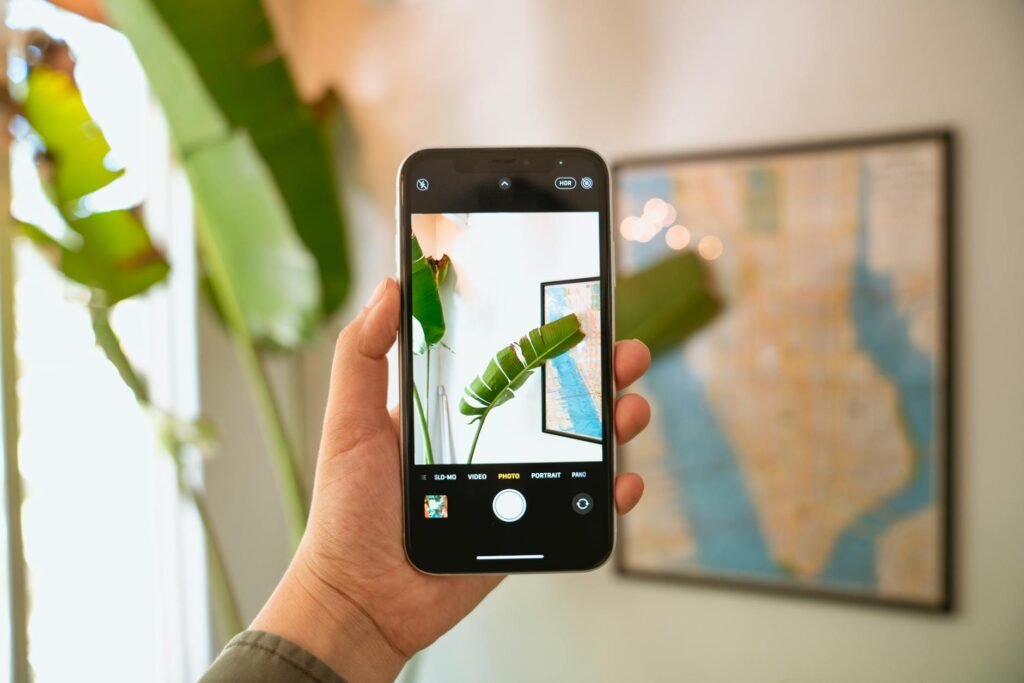
Consider a composite example. A renter buys a variegated pothos for $28 and puts it on a bookcase 9 feet from a west window behind a sheer curtain. Two months later, the vines are longer, the spaces between leaves are wider, and the leaf color looks duller. Using a light meter or a smartphone app at leaf level, the renter compares the current shelf with a side table closer to the window. The shelf reads much lower, and the plant scores 3 out of 10 on the audit: wrong distance, filtered light, clear stretch, and no winter backup plan. Light meters and phone apps can help with this comparison, even if the goal is simply relative measurement from one spot to another. (content.ces.ncsu.edu)
The best fix is not more fertilizer. In this example, moving the plant to a table 3 feet from the window, trimming the two stretchiest vines above a node, and adding a $22 clip-on LED on a timer for 13 hours a day during winter is usually smarter than replacing the plant every season. Extension guidance is consistent on the big points: stronger light improves new growth, leggy stems often benefit from pruning, and supplemental lights work best when they are used close enough to the plant and not left on around the clock. (extension.umn.edu)
| Indoor spot | What usually happens | Plants that often cope best | Best next move |
|---|---|---|---|
| South or southwest window with several hours of direct indoor sun | High light; good for plants that truly need brightness, but some foliage plants may scorch if pressed against hot glass | Succulents, cacti, hoya, citrus, other high-light plants | Use a sheer or pull the plant back a bit if leaves bleach or burn |
| East window or a few feet from a west or south window | Medium to bright indirect light; often the safest default zone for many houseplants | Many common foliage plants, including rubber plant, dracaena, philodendron, African violet | Start here if you are unsure and adjust after watching new growth |
| North window or a few feet back from a brighter window | Low light; growth usually slows and watering needs drop | Snake plant, ZZ plant, pothos, heartleaf philodendron, Chinese evergreen | Keep expectations realistic: survival is common, fast, dense growth is not |
| More than 8 to 10 feet from an average window or a dim corner | Often survival-only territory, or outright failure, without supplemental light | Very tough foliage plants at best | Add a grow light or use the spot for nonliving décor |
The fixes that actually work
- Move first, shop later. Give the plant the brightest acceptable placement in your home for two to four weeks before you buy fertilizer, a larger pot, or decorative lighting. Light is often the limiting factor. (extension.illinois.edu)
- Reduce distance before you try to solve everything with longer exposure. In many homes, moving a plant closer to a usable window improves intensity more effectively than leaving it deep in the room and hoping duration will make up for it. (yardandgarden.extension.iastate.edu)
- Match the plant type to the spot. Flowering houseplants usually need moderately bright light, and variegated plants often lose color or revert to greener growth in lower light. Plain green foliage plants are usually more forgiving. (extension-store.montana.edu)
- If natural light is weak, use supplemental lighting on a timer for roughly 12 to 16 hours total per day, and keep the light close enough to matter according to the fixture guidance. Light intensity falls quickly with distance. (extension.arizona.edu)
- After you improve light, prune leggy stems back to a node so replacement growth can come in fuller. In practice, better light helps future growth, but many stretched stems still need a trim to look compact again. (extension.umn.edu)
- Adjust water down if you keep a plant in a dimmer spot. Lower light usually means slower growth and lower water use, so the same watering routine that worked in brighter months can become too much later. (extension.umn.edu)
When moving closer still is not enough
Some rooms are simply poor plant rooms. A north-facing apartment with deep exterior shade, a shelf blocked by closed blinds, or an office that is evenly lit during weekday business hours but dark all weekend may keep a tough plant alive, yet still not provide the consistency many plants need. Extension sources even note that office lighting patterns can create this exact problem. (gardeningsolutions.ifas.ufl.edu)
This is where backup options matter. You can switch to a genuinely more tolerant plant, add a dedicated grow light, or accept that the dim spot is better for nonliving décor than for a plant you want to look full and healthy. That last choice is not defeat. It is good placement judgment. If you want flowers or crisp variegation, your expectations need to be higher, because flowering houseplants usually want more light and some variegated plants lose color in low light. (extension.umd.edu)
Common mistakes that keep plants weak
- Treating “low light” as if it means no meaningful daylight. It usually does not. (extension.okstate.edu)
- Assuming a plant tag overrides the room. Extension advice repeatedly says it is usually smarter to match the plant to the conditions than to force the room to fit the plant. (extension.umd.edu)
- Using fertilizer as a substitute for light. Plants make food through photosynthesis; fertilizer supports growth but does not replace missing light. (marylandgrows.umd.edu)
- Overwatering after the plant slows down. Dimmer light usually means slower water use. (extension.umn.edu)
- Hanging a grow light too far away or leaving it on all day and night. Duration helps, but distance and dark rest still matter. (extension.missouri.edu)
- Expecting old, stretched stems to magically look compact once the plant is moved. Better light helps the next growth cycle, but leggy growth often still needs pruning. (extension.umn.edu)
How to verify the fix before you declare victory
- Measure the old spot and the new spot at leaf level. Use a light meter or a phone app and compare morning, midday, and late afternoon readings if you can. Relative differences are often more useful than guessing with your eyes. (extension.illinois.edu)
- Track new growth for four to six weeks. Shorter internodes, larger leaves, better color, and a more balanced shape are better signs than staring at old damage. (extension.umaine.edu)
- Watch the soil dry-down time. If the pot starts drying a bit faster after a move to stronger light, that can be a healthy sign that the plant is using more water again. (extension.umn.edu)
- If the plant still looks bad after light improves, check the roots, drainage, and watering routine. Some root-zone problems can resemble low-light symptoms. (ipm.ucanr.edu)
Bottom line
The low-light myth is not that low-light plants exist. They do. The myth is that they will stay strong and compact anywhere indoors. In reality, most houseplants look weak and leggy when “low light” turns into “too little light.” If your plant is stretching, assume placement is the first problem to rule out. Measure the spot, move the plant, match the species to the room, and use supplemental light only when the room cannot do the job on its own. (extension.okstate.edu)
FAQ
Does a north window count as low light?
Usually, yes, or at least lower light than east, west, or south exposures. But the real answer depends on how far the plant is from the glass, whether trees or buildings block the window, and what season it is. A north window a few feet away can be useful low light; the center of a dim room is usually something else. (extension.illinois.edu)
Can a grow light save a dark corner?
Often, yes, but only if it is a real plant light setup and not just a decorative lamp. Extension guidance generally points to supplemental lighting used relatively close to the plant, on a timer, for roughly 12 to 16 hours a day with a dark rest period. (extension.arizona.edu)
Will a leggy pothos become full again if I move it?
Better light should improve new growth, but a fuller shape often requires pruning. That is especially true for pothos, which prefers bright indirect light and can lose leaf color in low light. Trim the stretched vines after improving placement so the replacement growth can come in denser. (extension.umn.edu)
Why did my plant look fine in summer but struggle in winter?
Indoor light changes with season, weather, sun angle, and exterior shade. A spot that is adequate in summer may become marginal in winter, and lower light usually means slower growth and less water use. That combination is why winter often exposes the low-light myth. (extension.umd.edu)
Are there any plants that really tolerate lower light well?
Yes, but even the tougher choices have limits. Extension sources commonly list plants such as snake plant, ZZ plant, pothos, heartleaf philodendron, and Chinese evergreen as better candidates for low-light situations than ferns, succulents, or many flowering plants. (extension.umd.edu)
References
- University of Minnesota Extension – Lighting for indoor plants and starting seeds – https://extension.umn.edu/node/19281
- University of Illinois Extension – Houseplants: Lighting – https://extension.illinois.edu/houseplants/lighting
- University of Maryland Extension – Lighting for Indoor Plants – https://extension.umd.edu/resource/lighting-indoor-plants
- Oklahoma State University Extension – Houseplant Care – https://extension.okstate.edu/fact-sheets/houseplant-care
- University of Missouri Extension – Lighting Indoor Houseplants – https://extension.missouri.edu/publications/g6515
- University of Maine Cooperative Extension – Too Much Water or Not Enough Light? Irregular Growth Commonly Seen on Plants – https://extension.umaine.edu/publications/5059e/
- NC State Extension Publications – Extension Gardener Handbook: Plants Grown in Containers – https://content.ces.ncsu.edu/extension-gardener-handbook/18-plants-grown-in-containers
- Mississippi State University Extension – Care & Selection of Indoor Plants – https://extension.msstate.edu/publications/publications/care-selection-indoor-plants
- Iowa State University Extension – Important Considerations for Providing Supplemental Light to Indoor Plants – https://yardandgarden.extension.iastate.edu/how-to/growing-indoor-plants-under-supplemental-lights/important-considerations-providing-supplemental-light-indoor-plants
- Montana State University Extension – Houseplant Selection and Care – https://extension-store.montana.edu/montguides/houseplant-selection-and-care