
Spider mites are one of the easiest houseplant pests to miss early and one of the fastest to regret later. Extension guidance consistently notes that the first clues are usually tiny pale specks, light stippling, or a few moving dots on the undersides of leaves, while obvious webbing tends to show up after populations have already built. Indoors, warm, dry, and dusty conditions can favor mites, which is why a fast inspection routine matters more than a dramatic rescue plan. (ipm.ucanr.edu)
TL;DR
- Look at the undersides of leaves first. Spider mites usually feed there, and that is where you are most likely to find mites, eggs, cast skins, and early webbing. (ipm.ucanr.edu)
- The earliest visual clue is often stippling: tiny white, yellow, or pale specks that make the leaf look dusty, sanded, or faded. (ipm.ucanr.edu)
- A white-paper tap test is one of the fastest home checks. Tap a suspect leaf over white paper and watch for tiny moving specks. (extension.umn.edu)
- If you find a likely infestation, isolate the plant the same day. Houseplant guidance recommends separating infested plants to reduce spread. (ipm.ucanr.edu)
- Do not assume one rinse solved it. At about 75°F, spider mites can develop from egg to adult in roughly two weeks, and populations can build faster in warmer conditions. (ipm.ucanr.edu)
Why this matters for your plant budget
A spider mite problem is not just a plant-care annoyance. It can turn into a replacement-cost problem. Consider a realistic indoor collection: a $32 rubber plant, a $24 pothos, a $28 calathea, a $40 monstera starter, a $16 fern, and an $18 ivy. If you catch mites early on one plant, you might spend about $12 on a labeled insecticidal soap and 20 minutes washing leaves. If you miss them for three weeks and two of the more stressed plants decline past the point of recovery, you can be out $70 to $100 before you even buy fresh potting mix or replacement pots. Early detection is usually the cheaper move.
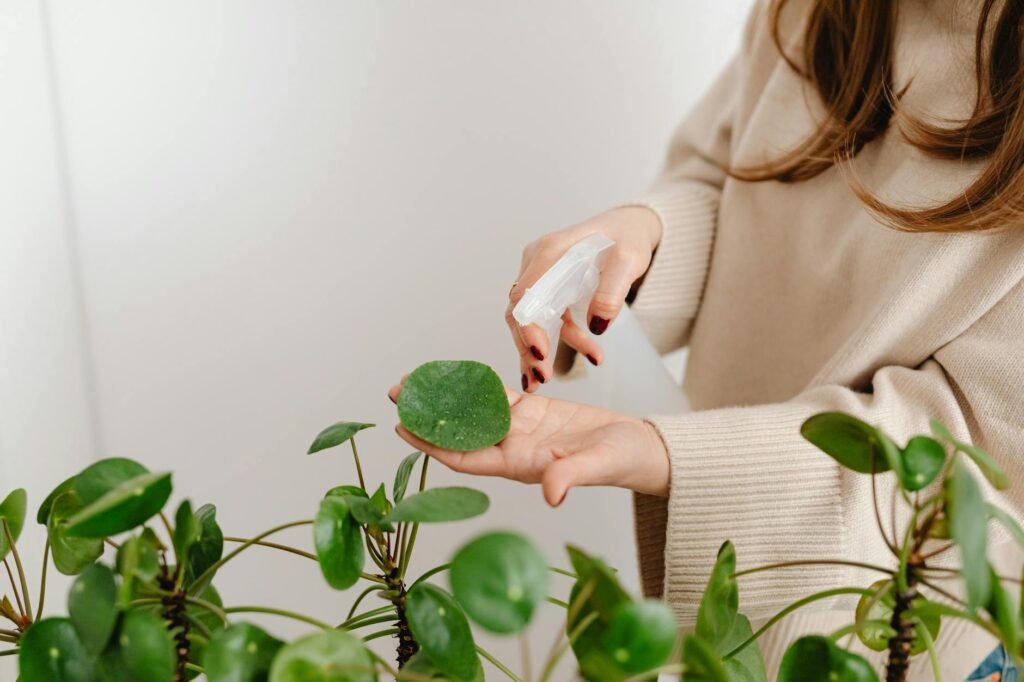
What early spider mite damage actually looks like
Spider mite damage often shows up before the mites do. University sources describe the first visible injury as stippling or speckling: tiny pale spots where mites have pierced leaf cells and removed their contents. As feeding continues, leaves can look mottled, bleached, yellowed, gray-green, or bronzed, and heavy infestations can lead to leaf drop. The mites themselves are tiny, usually on the underside of leaves, and a 10X hand lens is useful for seeing them clearly. (ipm.ucanr.edu)
- Tiny pale specks or stippling on the top of a leaf are often the first warning sign, especially when the pattern seems too fine and even to be sunburn or a watering issue. (ipm.ucanr.edu)
- Turn the leaf over and inspect the veins and leaf undersides. That is where spider mites usually feed and where you may spot moving dots, eggs, cast skins, or fine silk. (ipm.ucanr.edu)
- A positive white-paper tap test matters more than a casual glance. Tiny specks that move after you tap the leaf are much more suspicious than stationary dust. (extension.umn.edu)
- Fine webbing can confirm your suspicion, but it is not the ideal first clue because it often appears when populations are already high. (ipm.ucanr.edu)
- If the plant is in a warm, dry, dusty spot or is already stressed, raise your suspicion level. Those conditions are repeatedly flagged as favorable for spider mite activity. (ipm.ucanr.edu)
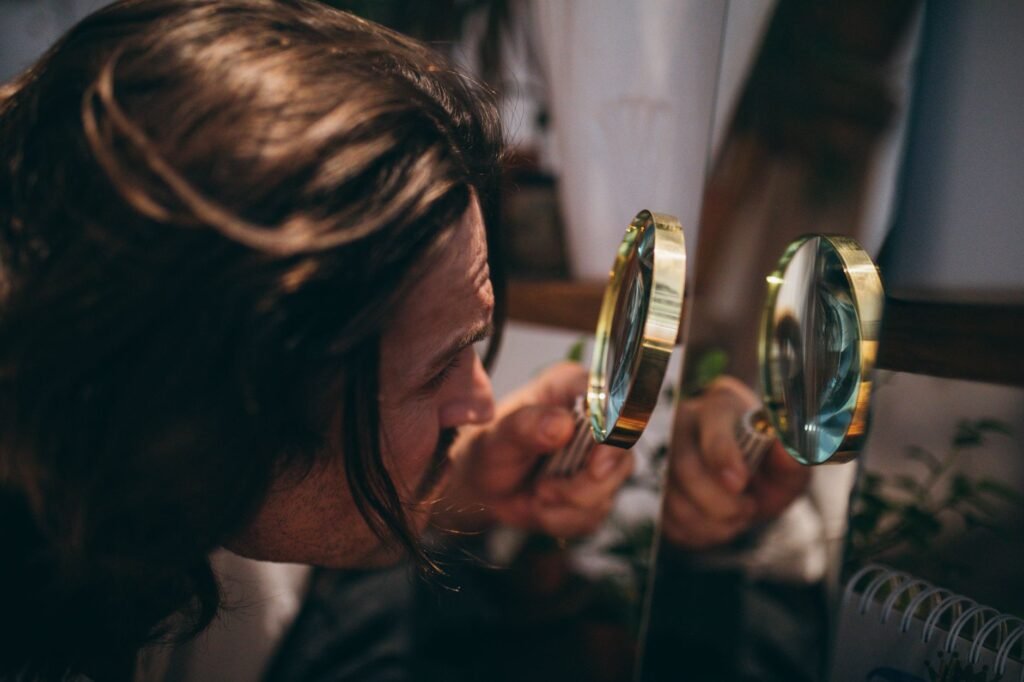
Use the SPECK Score to decide whether you are looking at a real problem
The most challenging task for a home grower is not the control of the plant, but rather whether there is an immediate reason to take some action or monitor. A quick reference SPECK score to quickly triage your plant is this: S=stippling, P=positive paper test, E=eggs or cast skins, C=cobweb style webbing; and K=conditions with known risk factors. This is not a diagnostic tool like a lab would use, but it can help avow you from making two major mistakes of possibly missing an insect burden/postponing treatment approach mistakenly using dust as a terminating factor/cosmetic stress versus having a severe infestation.
| Sign | Points | What you are seeing | What to do today |
|---|---|---|---|
| S: Stippling or pale specks | 2 | Fine white, yellow, or faded speckling on leaves is a classic early feeding symptom. (ipm.ucanr.edu) | Move to a closer inspection instead of assuming it is only dry air. |
| P: Positive paper test | 3 | Tap the leaf over white paper; tiny moving specks strongly increase the odds that mites are present. (extension.umn.edu) | Isolate the plant and inspect nearby plants the same day. (ipm.ucanr.edu) |
| E: Eggs or cast skins on leaf undersides | 3 | Eggs, cast skins, and tiny mites commonly collect on the underside of leaves. (ipm.ucanr.edu) | Plan a wash-down or labeled treatment instead of watchful waiting. |
| C: Cobweb-like webbing | 4 | Webbing usually means the infestation is more established, not just starting. (ipm.ucanr.edu) | Treat promptly and inspect neighboring plants. |
| K: Known risk conditions | 1 | Warm, dry, dusty rooms and stressed plants give mites an edge. (ipm.ucanr.edu) | Shorten the time between rechecks, even if evidence is still limited. |
The score indicates an infestational threat. Low suspicion (0-2) means that you will need to monitor closely. Likely early infestation (3-5), you would want to isolate the infested item immediately. Active infestation (6-8) means that the infested item may need to be washed with a labeled soap, or an oil to rid the infestation. If you receive a score of 9 or more, you should recognize that the infestation is likely spreading quicker than you will be able to see by casual observation.
A five-minute inspection routine that catches mites before they spread
- Start with any plant that looks dull, speckled, faded, or unexpectedly stressed. If you already suspect pests, move that plant away from others before you inspect it. Houseplant guidance recommends isolation once pests are detected. (ipm.ucanr.edu)
- Check three older leaves and three newer leaves. Look at the tops for stippling, then flip the leaves and inspect the undersides, especially along veins and near where the leaf joins the stem. A 10X hand lens is useful here. (ipm.ucanr.edu)
- Do the white-paper tap test. Hold a white sheet or index card under the leaf, tap firmly, and watch for tiny moving specks. This is one of the simplest confirmation methods recommended by extension sources. (extension.umn.edu)
- Look for supporting evidence, not just mites themselves: amber eggs, pale cast skins, leaf mottling, and fine silk all count. (extension.umn.edu)
- Inspect the nearest plants too, especially any with touching leaves or shared shelf space. Colorado State notes that once established, spider mites can crawl short distances or be carried to other plants. (extension.colostate.edu)
- Write down the date and repeat the check in three to four days, then again over a two-week span. That schedule matches the reality that mites can develop quickly in warm indoor conditions. (ipm.ucanr.edu)
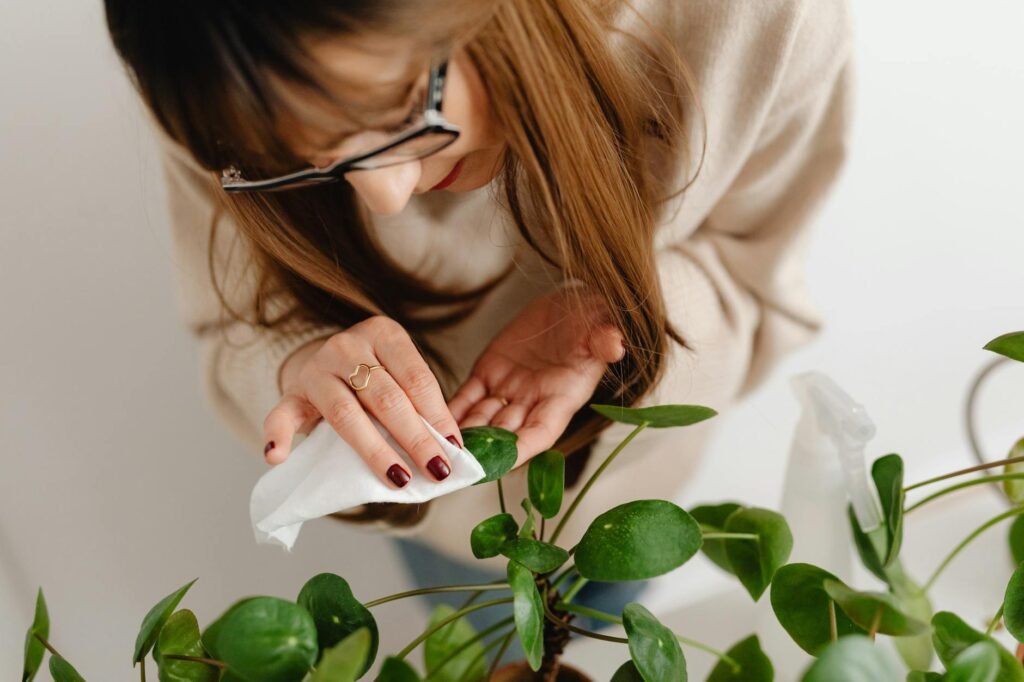
Monitor, wash, treat, or toss? A practical decision table
| Situation | Best next move | Why this is usually enough | Where it fails |
|---|---|---|---|
| SPECK Score 0 to 2, no moving specks, no webbing | Monitor every three to four days and improve cleanliness around the plant. | Low-evidence cases can be watched, especially if you only have vague discoloration and no paper-test confirmation. | It fails if you stop checking too soon or ignore nearby plants. |
| SPECK Score 3 to 5, positive paper test or clear stippling on one plant | Isolate and wash leaves and stems with water, then recheck on schedule. UC IPM recommends washing soft-bodied pests and mites from houseplants. (ipm.ucanr.edu) | Mechanical removal can knock back light infestations before they spread. | It fails on dense foliage if coverage is poor or eggs keep hatching. |
| SPECK Score 6 to 8, repeated positive checks, visible eggs or early webbing | Wash first, then use an insecticidal soap or horticultural oil labeled for indoor use on your plant species and against spider mites. Test a small area first. (extension.colostate.edu) | These products can work well when they contact the pest directly. | It fails if you miss leaf undersides, use the wrong product, or do only one application. (extension.colostate.edu) |
| SPECK Score 9+, multiple plants affected, or a valuable collection at risk | Treat the collection systematically, consider predatory mites for a larger indoor setup, and discard the cheapest or worst-hit plant if it remains a source of spread. Persistent infestations may justify disposal according to UC IPM houseplant guidance. (ipm.ucanr.edu) | At this stage, containment matters as much as rescue. | It fails if you try to save every plant equally and do not remove the main source plant. |
Common mistakes that let spider mites win
- Waiting for obvious webbing. Webbing is useful confirmation, but it is often a later-stage sign, not the earliest one. (ipm.ucanr.edu)
- Checking only the top of the leaf. Spider mites usually feed on the underside, so a top-only inspection misses the most important evidence. (ipm.ucanr.edu)
- Treating once and assuming the problem is over. Insecticidal soaps have little to no residual action, and repeat applications may be needed at short intervals. (extension.colostate.edu)
- Using dish soap or homemade cleaners instead of a labeled insecticidal soap. Colorado State warns that household soaps can injure plants. (extension.colostate.edu)
- Leaving the suspect plant in a tight cluster with the rest of the collection. Indoor plant guidance recommends isolation once pests are detected. (ipm.ucanr.edu)
- Buying a random houseplant spray without checking whether spider mites and your plant species are actually on the label. EPA notes that the label tells you where, how, and how often the product may be used. (extension.colostate.edu)
When a rinse is not enough
The first-plan failure cases are predictable. Light washing may not be enough when you have dense foliage, several plants already testing positive, or repeated signs on new growth after the first cleanup. In those cases, move beyond casual rinsing. Extension sources point to insecticidal soap and horticultural oil as common next-step tools for spider mites, but they work by contact, can require repeat applications, and may injure some plants if you skip a spot test. If you have a larger indoor collection or a dedicated plant room, commercially available predatory mites can be a reasonable backup option, although humidity and setup can affect how well they perform. And if one badly infested plant keeps reseeding the problem, UC IPM explicitly notes that disposal can be the smartest way to protect the rest of the collection. (extension.colostate.edu)
This article is informational, not pesticide-label instructions. If you use a pesticide product indoors, read the full label first, confirm that it is labeled for spider mites and for your plant setting, and follow all directions exactly. EPA states that pesticide labels are legally enforceable and define where, how, how much, and how often a product may be used. (epa.gov)
How to verify that your fix actually worked
Do not judge success by whether the plant looks cleaner the next morning. Verify the result with a short audit. Take a phone photo of the worst leaf on day 0. Repeat the paper test on day 4 and day 7. Inspect the newest leaves by day 14. You are looking for three things: no fresh stippling, no moving specks on the paper test, and no new webbing on leaf undersides. That timeline is practical because mites can complete development in about two weeks around 75°F, and soaps often need repeat use because they do not leave much residual control. If the plant stays clean through those checks and neighboring plants stay clean too, you are probably past the takeover stage. (ipm.ucanr.edu)
Bottom line
If you remember one rule, make it this: spider mites are easier to catch by pattern than by sight. Look for stippling first, check the leaf underside second, and use the white-paper tap test third. Once you have real evidence, a same-day isolation decision is usually smarter than a wait-and-see approach. In houseplant care, the cheapest rescue is often the earliest one. (ipm.ucanr.edu)
Frequently asked questions
Do spider mites live in the soil or mostly on the plant?
For houseplant troubleshooting, think of spider mites as foliage pests first. Extension sources describe them feeding mainly on the undersides of leaves and producing symptoms there, so leaf inspection matters more than digging into the potting mix. (ipm.ucanr.edu)
Do I need to throw away a plant at the first sign of spider mites?
Usually not. Early infestations often justify isolation, washing, and follow-up checks first. Disposal becomes more reasonable when the infestation persists, worsens, or threatens other plants in the collection. (ipm.ucanr.edu)
Is visible webbing always present with spider mites?
No. Webbing is a helpful clue, but the earliest signs are often stippling, mottling, or tiny moving dots on leaf undersides. If you wait for dramatic webbing, you may be waiting too long. (ipm.ucanr.edu)
Can I use dish soap instead of insecticidal soap?
That is not the safer default. Colorado State warns that household soaps and detergents can injure plants, while labeled insecticidal soaps are the intended option for pest control. (extension.colostate.edu)
How long should I quarantine a new houseplant before adding it to the rest of the collection?
A conservative home rule is two to three weeks. Minnesota Extension suggests one to two weeks for newly acquired plants, while Colorado State recommends a few weeks and specifically notes at least three weeks as a precaution. Using a two- to three-week window gives you time for hidden pests to show themselves. (extension.umn.edu)
References
- UC IPM: Houseplant Problems – https://ipm.ucanr.edu/home-and-landscape/houseplant-problems
- UC IPM: Spider Mites – https://ipm.ucanr.edu/home-and-landscape/spider-mites/
- University of Minnesota Extension: Managing insects on indoor plants – https://extension.umn.edu/product-and-houseplant-pests/insects-indoor-plants
- University of Minnesota Extension: Twospotted spider mites in home gardens – https://extension.umn.edu/yard-and-garden-insects/spider-mites
- Colorado State University Extension: Managing Houseplant Pests – https://extension.colostate.edu/resource/managing-houseplant-pests/
- Colorado State University Extension: Insect Control – Insecticidal Soap – https://extension.colostate.edu/topic-areas/insects/insect-control-soaps-and-detergents-5-547/
- US EPA: Introduction to Pesticide Labels – https://www.epa.gov/pesticide-labels/introduction-pesticide-labels