
Most houseplants are not killed by neglect. They are killed by routine.
A weekly reminder may feel organized, but indoor plants do not drink at a fixed rate. Light, temperature, humidity, pot size, pot material, soil mix, and the plant’s growth stage all affect how quickly the root ball dries. When watering becomes a habit instead of a check, you risk yellow leaves, fungus gnats, root rot, and the quiet expense of replacing plants and potting mix you did not need to lose. (extension.umd.edu)
TL;DR
- Stop watering on a calendar. Use the calendar only as a reminder to check. (extension.umd.edu)
- For many standard foliage plants, water when the top 1 to 2 inches are dry and the pot feels lighter. (hort.extension.wisc.edu)
- If the plant is wilted but the soil is wet, overwatering or root trouble may be the issue, so investigate before adding more water. (extension.umn.edu)
- Succulents and cacti usually need a full wet-dry cycle, not a small sip every few days. (yardandgarden.extension.iastate.edu)
- Use the Dry-Enough Scorecard so the soil check and at least one backup signal agree before you water.
Why a fixed schedule keeps failing
A fixed schedule fails for two reasons. First, the same plant may need very different amounts of water in July and January, or in a bright south-facing window versus a dim hallway. Second, containers dry at different speeds. Small pots dry faster than large ones, and clay dries faster than plastic. That means a water-every-Sunday rule can be too much for one plant and not enough for the one next to it. (hort.extension.wisc.edu)
Leaf symptoms also mislead people. Yellow leaves can mean too much water, and wilt can mean too little water or too much water. If the soil is already moist, more water is often the wrong answer. The root zone matters more than leaf drama. (extension.umd.edu)
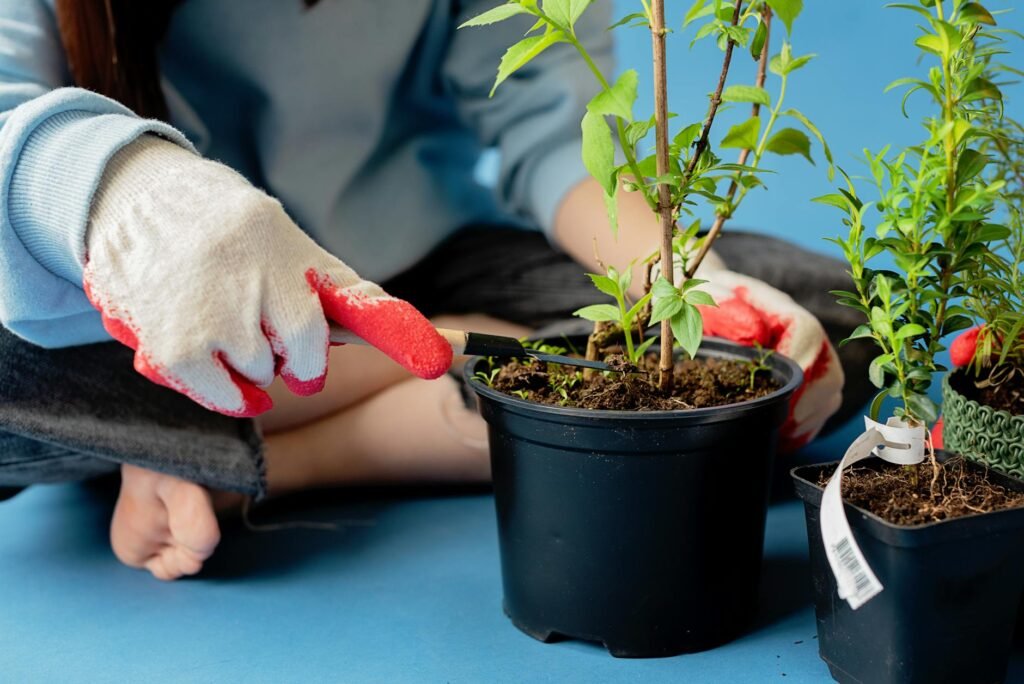
Use the Dry-Enough Scorecard
The most reliable home method is not a gadget. It is a short scorecard that makes you combine signals. Iowa State notes that a combination of factors works best when deciding whether a plant needs water. The Dry-Enough Scorecard turns that idea into a repeatable household rule you can use in under a minute. (yardandgarden.extension.iastate.edu)
- Set the target first. Moisture-loving plants should be checked when the top inch is drying. Standard foliage plants usually can wait until the top 1 to 2 inches are dry. Succulents and cacti usually should dry much more, often through most or all of the pot. (hort.extension.wisc.edu)
- Give 2 points if the soil has reached that target dryness. Use a finger for smaller pots. For big pots, use a chopstick, skewer, or dowel so you are checking the lower root zone, not just the surface. (extension.umd.edu)
- Give 1 point if the pot feels clearly lighter than it did the day after a full watering. This weight check is one of the most reliable low-tech signals. (extension.umn.edu)
- Give 1 point if a plant-specific dry sign appears. A peace lily may soften as it gets dry. A succulent may start to wrinkle slightly. Do not count generic wilt if the mix is still wet. (extension.umd.edu)
- Read the score this way: 0 to 1 means wait, 2 means recheck tomorrow, and 3 or more means water today. The threshold is stricter than many people expect, and that is the point.
Hard stop: if the lower root zone is still moist, wait. Plants should be watered when needed, not when the calendar says they should be watered. (extension.umd.edu)
What dry enough looks like by plant type
| Plant situation | How deep to check | Water when… | Do not rely on… |
|---|---|---|---|
| Moisture-loving leafy plants | About 1 inch down | The top inch is dry or nearly dry, but the plant has not been allowed to go bone-dry. (hort.extension.wisc.edu) | A dramatic wilt as your first signal. Wet soil can also produce wilt. (extension.umd.edu) |
| Standard tropical foliage | 1 to 2 inches down | That zone feels dry and the pot is lighter than after the last full soak. (hort.extension.wisc.edu) | A dry surface crust alone. The top layer may dry before the root zone does. (extension.umd.edu) |
| Succulents and cacti | Several inches down or through most of the pot | The mix is dry through most or all of the container and the plant is very light. Use a full wet-dry cycle. (yardandgarden.extension.iastate.edu) | A weekly schedule or tiny just-in-case sips. These plants do not tolerate staying wet. (yardandgarden.extension.iastate.edu) |
| Large or deep containers | Use a dowel or skewer to the bottom | The lower zone shows little or no moisture, not just the top inch. (extension.umd.edu) | Surface touch alone. Deep pots can stay wet underneath for days. (extension.umd.edu) |
If you do not know the category, start in the middle. Treat it like a standard foliage plant, check the soil before every watering, and watch two full dry-down cycles before making the interval shorter or longer. Use the pattern to tell you when to inspect again, not when to pour. (extension.umd.edu)
A small household example with real money at stake
Picture a modest indoor setup: one trailing foliage plant at $24, one peace lily at $32, and one small succulent at $14. If all three get watered every Saturday, the succulent is the most likely to suffer first. Add a $12 bag of replacement mix and $9 fungus gnat traps after weeks of staying too wet, and one bad watering habit has cost $35 before you replace anything. Lose two plants over a year and the total can easily move past $70. The prices here are illustrative, but the money leak is real: guessing is often more expensive than waiting one more day and checking the root zone again. (extension.umn.edu)
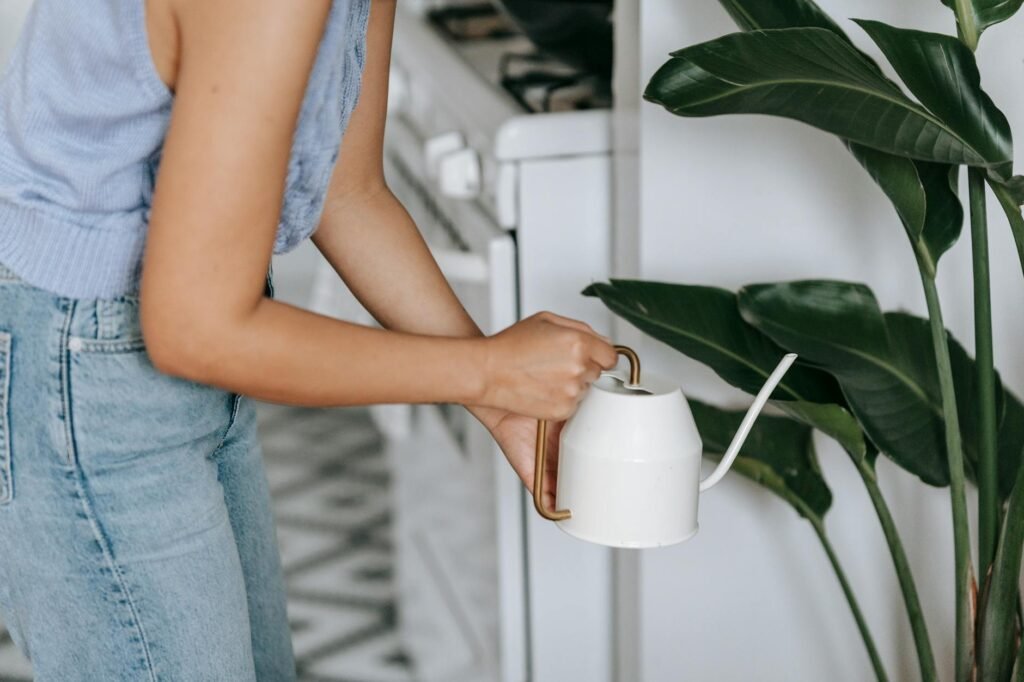
Build a no-guess watering baseline in two cycles
- Water thoroughly until excess water drains out the bottom, then empty the saucer or decorative pot. This gives you a clean starting point and helps flush leftover salts. (hort.extension.wisc.edu)
- Right after that watering, lift the pot. This is your fully watered baseline. For a large pot, insert a dowel to the bottom so you know what a moist lower root zone looks like. (extension.umn.edu)
- Write down four things: plant type, room, pot material, and target dryness from the table above. A terracotta pot in a bright room will not dry on the same timetable as plastic in low light. (hort.extension.wisc.edu)
- Check, do not water, every day or two. Score the plant using the Dry-Enough Scorecard instead of watering automatically.
- When the score reaches 3 or more, water thoroughly again. Record how many days passed.
- Repeat once more. After two full cycles, you have a realistic dry-down range for that plant in that spot. Use that range as a reminder window to check again, especially after seasonal light or temperature changes. (hort.extension.wisc.edu)
Common mistakes that lead to bad calls
- Touching only the surface. Extension guidance recommends checking about 1 to 2 inches down for most plants because the surface can dry first. (extension.umd.edu)
- Treating every plant the same. Some plants prefer evenly moist soil, while succulents and cacti need much more dry-down. (hort.extension.wisc.edu)
- Using leaf droop as the only signal. Wilt with wet soil can point to overwatering or root rot, not thirst. (extension.umn.edu)
- Leaving water in cachepots, saucers, or sleeves. Standing water keeps roots too wet and can lead to bud drop, yellowing, root problems, and fungus gnats. (hort.extension.wisc.edu)
- Keeping plants in containers without drainage holes. A decorative pot can work as an outer pot, but the inner growing pot still needs drainage. (extension.umn.edu)
- Ignoring slow seasons. Plants often need less water during slower growth periods, especially in winter or after moving indoors. (hort.extension.wisc.edu)
When the usual method is not enough
Sometimes the method is fine and the setup is the problem. If your finger cannot reach the target depth because the mix is hard, or the plant seems dry one day and soggy the next, the potting mix may be compacted or the plant may be rootbound. If a plant stays wet for an unusually long time, low light, poor drainage, or a too-large pot may be the real issue. And if the plant is wilted while the soil is still wet, check roots before you add more water. Soft brown roots, a bad smell, and persistent yellowing point to root trouble, not thirst. (extension.umd.edu)
- For a pot without drainage, move the plant into a nursery pot with holes and keep that inside the decorative container. Remove it to water, let it drain fully, then return it. (extension.umn.edu)
- For a plant that never seems to dry properly, repot into a commercial mix that drains better. Do not use garden soil, and do not add rocks as a fake drainage layer. (extension.umn.edu)
- For very large floor plants, keep a wooden dowel nearby and treat it like a dipstick. If you want a second opinion, Iowa State notes that moisture meters can substitute for touch, though they are hardly essential. (extension.umd.edu)
- If root rot is advanced, replacement may be cheaper and more realistic than a long rescue effort. University guidance notes that throwing out a severely affected houseplant is often the most cost-effective option. (hort.extension.wisc.edu)
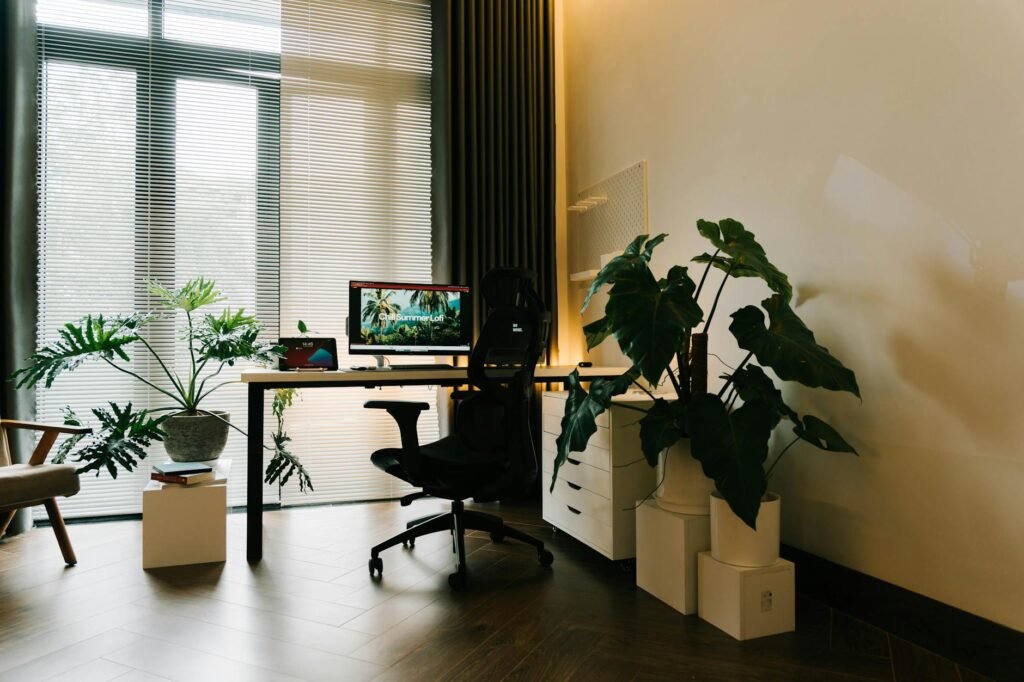
How to verify that your watering routine is actually working
A good watering system should become more predictable, not more mysterious. Once a month, run a quick audit. Compare this month’s dry-down time with last month’s. If the pot is drying much faster, the plant may be in more light, in active growth, or becoming rootbound. If it is staying wet much longer, the room may be darker or cooler, or the mix may be holding too much water. Those shifts are normal. What matters is noticing them before your routine turns into guesswork again. (hort.extension.wisc.edu)
- If dry-down time suddenly shortens, check whether roots are circling, filling the pot, or poking from drainage holes. That often means the plant is rootbound or the container is now too small. (montana.edu)
- If dry-down time suddenly lengthens, look for lower light, cooler temperatures, a too-large pot, or potting mix that has broken down and is holding water longer. (hort.extension.wisc.edu)
- After repotting or moving a plant, relearn the wet weight. Old timing notes stop being useful when the light, pot size, or soil changes. (hort.extension.wisc.edu)
- If yellow leaves or fungus gnats show up, pause and inspect moisture before you water again. Both can be signs that the mix is staying too wet. (extension.umd.edu)
Bottom line
The practical rule is simple: water when the root zone is dry enough for that plant, confirmed by at least one backup signal such as pot weight or a skewer test. Not when the leaves look needy. Not when the top dusting of soil is pale. And not because it is Saturday. That small pause is what separates accurate watering from expensive guessing. (extension.umd.edu)
FAQ
Is the finger test enough for every houseplant?
For many small and medium pots, yes. But large containers, deep pots, and succulents usually need a deeper check with a skewer or dowel because the surface can dry while the lower root zone stays wet. (extension.umd.edu)
Why is my plant drooping even though the soil is wet?
Too much water can cause droop or wilt because roots lose access to oxygen and may begin to rot. If the mix is wet, stop watering, check drainage, and inspect roots if symptoms continue. (extension.umn.edu)
Can I bottom-water instead of watering from the top?
Sometimes. Bottom watering can work for certain plants or hard-to-reach pots, but excess water still needs to be drained off and plants should not sit in water indefinitely. Top watering until excess drains out is still the default for most houseplants. (extension.umd.edu)
Should I buy a moisture meter?
It can help, especially for large pots or if touching the soil is awkward. Iowa State notes that moisture meters can be used instead of touch, but the meter is not more important than drainage, plant type, and the weight of the pot. (yardandgarden.extension.iastate.edu)
What should I do if my decorative pot has no drainage hole?
Use it as a cachepot, not as the actual growing container. Keep the plant in an inner pot with drainage holes, remove it to water, and let it drain completely before putting it back. (extension.umn.edu)
How often should I water in winter?
Often less than during active growth because many plants slow down indoors in winter. The safer move is to check soil depth and pot weight more often than you water, then let the plant tell you when it is ready. (hort.extension.wisc.edu)
References
- University of Maryland Extension – Watering Indoor Plants – https://extension.umd.edu/resource/watering-indoor-plants
- University of Maryland Extension – Overwatered Indoor Plants – https://extension.umd.edu/resource/overwatered-indoor-plants
- University of Minnesota Extension – Watering houseplants – https://extension.umn.edu/yard-and-garden-news/watering-houseplants
- Wisconsin Horticulture – Houseplant Care – https://hort.extension.wisc.edu/articles/houseplant-care/
- Iowa State University Extension and Outreach – Growing Succulents Indoors – https://yardandgarden.extension.iastate.edu/how-to/growing-succulents-indoors
- Wisconsin Horticulture – Root Rots on Houseplants – https://hort.extension.wisc.edu/articles/root-rots-houseplants/
- Iowa State University Extension and Outreach – How to Care for Houseplants – https://yardandgarden.extension.iastate.edu/how-to/how-care-houseplants