
Most houseplants are not lost because you forgot them once. They are lost because they stay wet too long, too often. Extension guidance from Clemson, Maryland, and Minnesota consistently warns that overwatering is a leading cause of trouble in potted indoor plants, and that constantly wet potting mix can lead to root rot, yellowing leaves, and fungus gnats. (extension.umd.edu)
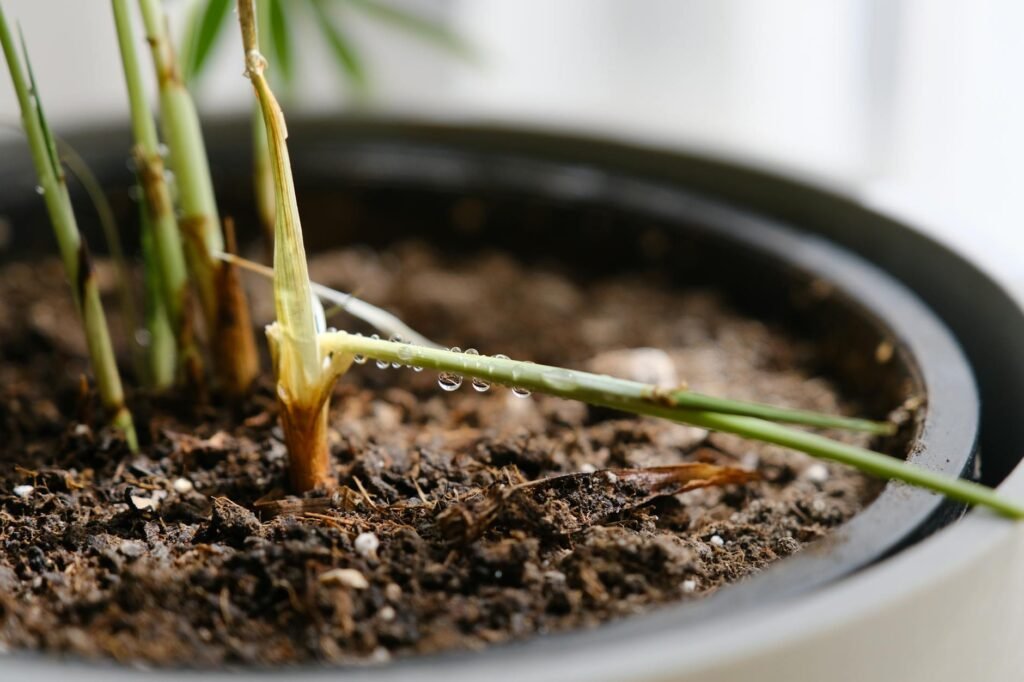
The expensive part is how quiet this mistake is. A plant that is actually drowning can look thirsty. Leaves droop, growth stalls, lower leaves yellow, and the owner responds with more water. That loop can turn a $20 to $40 plant into a repeat purchase, sometimes with fresh soil, sticky traps, and a new pot on top. Extension sources note that root damage from excess moisture can itself cause wilting because damaged roots cannot move water properly. (hgic.clemson.edu)
TL;DR
- The main mistake is not giving too much water in one moment. It is watering again before the root zone has dried enough for that plant and that room. (extension.umd.edu)
- A fixed weekly schedule is unreliable because light, temperature, pot size, pot material, and plant type all change how fast soil dries. (hgic.clemson.edu)
- Wilt in wet soil is a warning sign, not an automatic cue to water. Root rot can make a plant droop even when moisture is still present. (extension.umn.edu)
- Use the WATER Test in this article before every watering: Weight, Air and light, Top/root-zone dryness, Exit path, and Risk profile of the plant.
- Drainage holes matter. So does emptying saucers and decorative pots after watering. Never let a houseplant sit in runoff. (extension.umd.edu)
Why overwatering does more damage than simple neglect
Roots need oxygen as well as moisture. When potting mix stays saturated, air space disappears, roots weaken, and pathogens that cause root and crown rots get an easier opening. That is why a plant in a poorly drained pot often declines faster than a plant that was allowed to get a bit dry once or twice. Minnesota Extension puts it bluntly: a plant in a pot with poor or no drainage is doomed. (extension.umn.edu)
Routine watering is especially risky in lower light and in winter. The University of Maryland notes that many beginners assume once a week is correct, but growth slows indoors and the right interval depends on light, warmth, and how much moisture still remains around the roots. A plant that dries in four days in July may take nine or ten days in January in the same apartment. (extension.umd.edu)
Use the WATER Test before you reach for the watering can
A good watering routine needs a repeatable filter, not a guess. The WATER Test is a simple five-part check you can do in under a minute. Score one point for each sign that says the plant is truly ready for water. If you get 4 or 5, water thoroughly. If you get 3, wait 24 hours or use a skewer as a tiebreaker. If you get 0 to 2, do not water yet. If the pot has no drainage hole or is sitting in old runoff, fix that first regardless of score. This framework is an editorial tool built from extension guidance on soil feel, pot weight, seasonality, and drainage. (extension.umd.edu)
- W = Weight. Lift the pot. Dry potting mix is noticeably lighter than moist mix. Train your hands by lifting right after a full watering and again over the next several days. (extension.umd.edu)
- A = Air and light. Bright, warm, fast-growing conditions use water faster. Cool rooms and low light slow drying. (hgic.clemson.edu)
- T = Top and root-zone dryness. For many houseplants, check at least the top 2 inches. On larger pots, use a stick, skewer, or ruler deeper in the root zone. Succulents and cacti usually need a much drier interval. (extension.umd.edu)
- E = Exit path. Water must be able to leave the container, and the saucer or cachepot must be emptied after watering. (extension.umd.edu)
- R = Risk profile. A fern or peace lily usually wants moisture sooner than a snake plant, jade, or cactus. The plant type matters as much as the calendar. (extension.umd.edu)
If you only adopt one change, make it this: never water because the top surface looks dry from six feet away. Dry-looking topsoil is weak evidence. Weight, depth, and drainage tell the real story. (extension.umd.edu)
A faster diagnosis when the leaves look bad
| What you notice | What it often means | Safer first move |
|---|---|---|
| Lower leaves yellowing while soil stays damp | Wet-root stress is more likely than thirst | Pause watering, confirm drainage, and inspect roots if decline continues. (extension.umd.edu) |
| Plant wilts but potting mix is still moist | Root damage can mimic drought | Do not add more water first; check roots and crown for soft, dark tissue. (hgic.clemson.edu) |
| Top inch seems dry but the pot feels heavy | The root ball is still holding moisture lower down | Wait and recheck tomorrow or use a skewer deeper in the pot. (extension.umd.edu) |
| Tiny black flies around the pot | The mix is staying damp long enough for fungus gnats | Let the top 1 to 2 inches dry more between waterings and fix standing-water issues. (extension.umn.edu) |
| Soil has shrunk from the pot edge and water races through | The mix may be overly dry and hard to rewet evenly | Rewet thoroughly once, then go back to condition-based watering instead of frequent sips. (hgic.clemson.edu) |
The common thread is that symptoms do not automatically answer the watering question. Yellowing, drooping, and slow growth can all point in opposite directions. The next move should be a root-zone check, not a reflex pour from the watering can. (extension.umd.edu)
The money leak most plant owners miss
Consider a realistic apartment setup: eight common houseplants, with replacement prices ranging from $18 for a small pothos to $35 for a medium snake plant or peace lily. If three plants fail over a year because they stay wet too often, and each replacement also needs $6 to $10 in fresh mix, sticky traps, or a nursery pot, the total cost can easily land around $90 to $140. That is not a financial emergency, but it is a recurring leak. A 60-second watering check is cheaper than another round of rescue products.
The prices above are an illustrative household example, not a market survey. The point is behavioral: overwatering creates repeat replacement costs that feel small one plant at a time.
How to water without creating a swamp
- Check first. Use the WATER Test, especially pot weight and root-zone dryness. For many houseplants, about 2 inches is a useful checkpoint; for larger pots, test deeper with a stick or skewer. (extension.umd.edu)
- Water thoroughly, not timidly. When the plant is ready, water enough that moisture moves through the root ball and drains from the bottom. Top watering also helps flush excess salts. (extension.umd.edu)
- Let it drain fully. If the plant sits inside a decorative pot, remove the inner pot, water in the sink, and return it only after draining. (extension.umn.edu)
- Dump the runoff. Empty the saucer or outer pot after watering. Never leave the root ball sitting in collected water. (extension.umd.edu)
- Track the dry-down. Note how many days that plant, in that room, in that season, actually takes to dry. Your real interval is a pattern, not a rule printed on a care tag. (extension.umd.edu)
- If the mix has become bone dry and shrunken, rewet once with a soak or slow second watering, then return to a normal check-based routine. (hgic.clemson.edu)
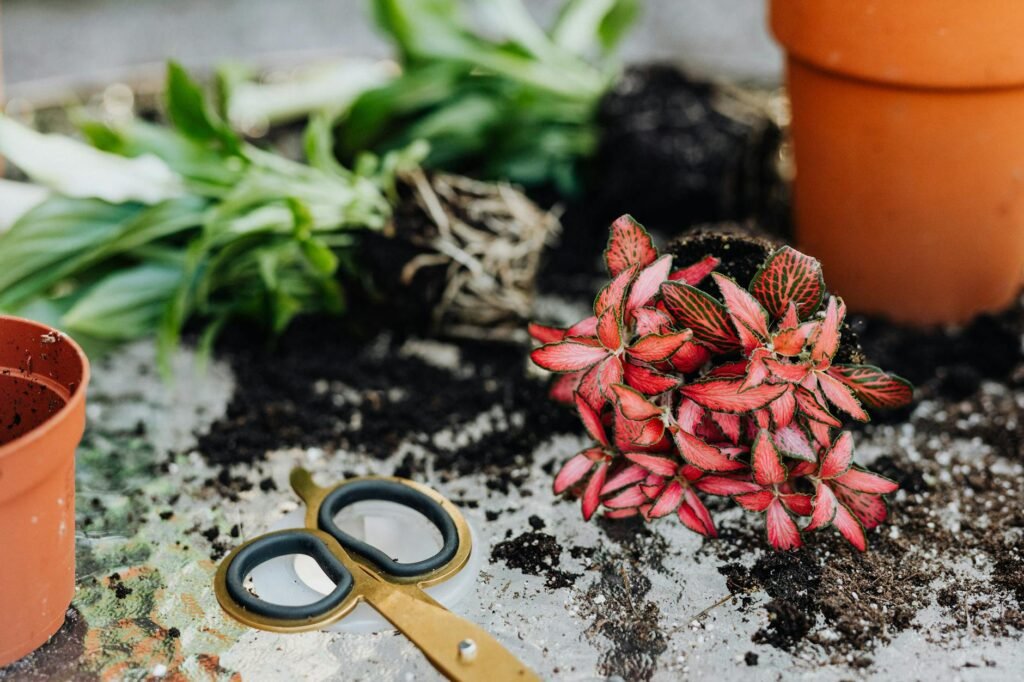
Bottom watering can be useful for certain plants or for fungus gnat cleanup, but it is not a workaround for poor drainage or chronically wet soil. Any extra water still needs to be emptied. (extension.umd.edu)
When waiting longer will not be enough
Sometimes the plant is already past the point where simply delaying the next watering will solve it. The University of Maryland describes advanced root rot signs as brown to black roots, soft or mushy tissue, poor growth, and wilting even when potting media moisture is adequate. In some cases, the outer root layer pulls away and leaves a thin thread behind. (extension.umd.edu)
- Unpot the plant and inspect the root system. Healthy roots are generally light-colored and firm; diseased roots are dark and soft. (extension.umd.edu)
- Trim obviously rotten roots and discard sour, waterlogged mix. Replant only healthy sections in fresh, soilless houseplant mix and a clean pot with drainage. (extension.umd.edu)
- If only a small portion of the plant is healthy, take stem cuttings from good tissue as a backup. Extension guidance specifically recommends cuttings when severe damage is present. (extension.umd.edu)
- If the crown is mushy and very few healthy roots remain, replacement may be the most practical choice. Severely damaged plants are often best discarded. (extension.umd.edu)
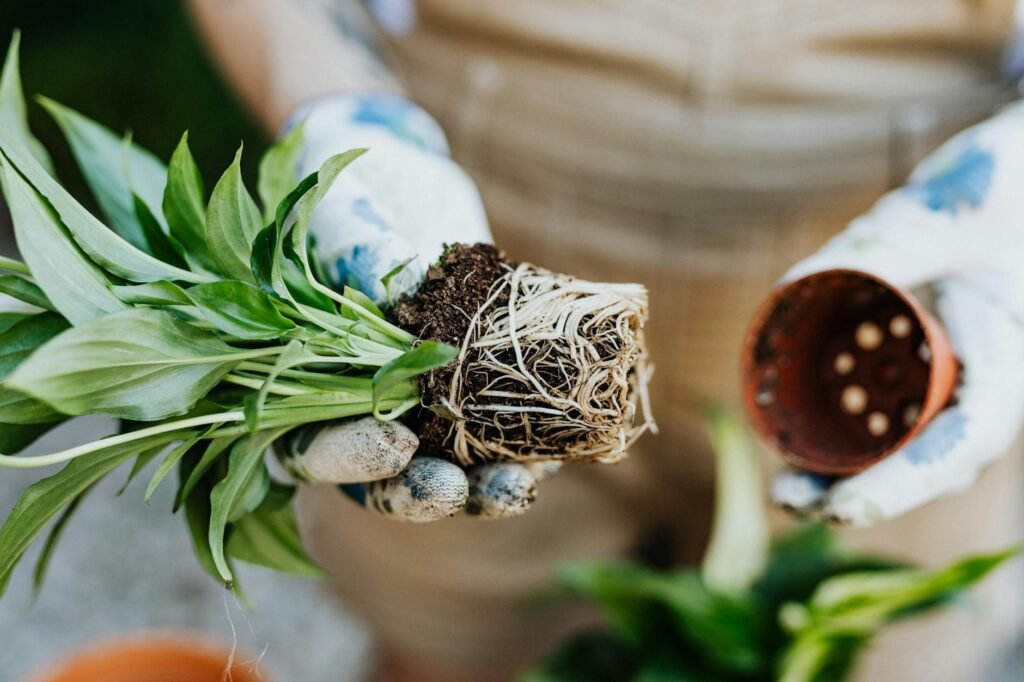
Not every yellow leaf means overwatering. Maryland also lists pests, excessive salts, and light problems as possible causes, which is why a quick root and soil check matters before you change your routine. (extension.umd.edu)
Common mistakes that feel responsible but backfire
- Watering every Sunday whether the plant needs it or not. Extension guidance explicitly warns against schedule-only watering. (extension.umd.edu)
- Adding a small splash every few days instead of one full watering followed by a real dry-down. That often keeps the upper root zone constantly damp. (extension.umd.edu)
- Leaving a nursery pot inside a decorative cachepot full of runoff. This is one of the easiest ways to create chronic wet roots. (extension.umn.edu)
- Moving a plant into a much larger pot too soon. Extra soil volume can stay wet longer than the reduced root system can use. (extension.umn.edu)
- Putting stones or pottery shards in the bottom and assuming that solved drainage. Minnesota Extension advises against this. (extension.umn.edu)
- Treating cacti, succulents, hoyas, ferns, and tropical foliage as if they share one watering rhythm. They do not. (extension.umn.edu)
How to pressure-test your routine for the next two weeks
If you want proof that your new routine is working, run a short audit instead of relying on memory. After a full watering, lift the pot and note how heavy it feels. Then check the same plant once a day for 10 to 14 days using weight plus a skewer or finger test. Maryland specifically recommends learning the weight change over time and, on larger plants, using a stick or ruler to see where moisture still remains. (extension.umd.edu)
- Pick one problem plant and one healthy plant for comparison.
- Log three things only: date, pot weight feel, and whether the root zone is dry enough.
- If symptoms continue despite a reasonable dry-down, slide the plant out and inspect the roots instead of guessing. (extension.umd.edu)
- Use what you learn to reset the interval for that plant in that spot, rather than copying a generic online schedule. (hgic.clemson.edu)
Bottom line
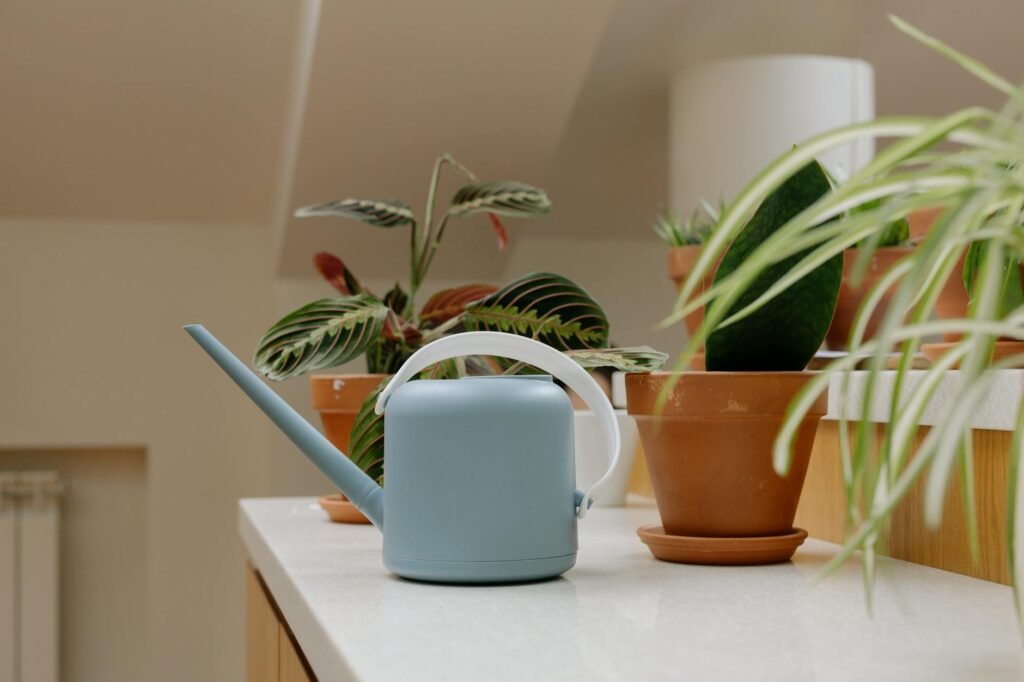
The quiet killer is not one missed watering. It is watering too soon, then mistaking wet-root stress for thirst. If you stop watering by calendar and start watering by evidence, you will likely lose fewer plants, spend less replacing them, and make better use of every bag of mix, pot, and fertilizer you already bought. Extension guidance supports the core rule: check the root zone, check the weight, and respect drainage before you water again. (extension.umd.edu)
FAQ
Is watering once a week ever a good rule?
It can be a reminder to check your plants, but it is a poor rule for automatic watering. Extension sources say watering needs change with light, temperature, pot type, pot size, soil mix, plant species, and season. (hgic.clemson.edu)
Can an overwatered plant really look thirsty?
Yes. Clemson, Maryland, and Minnesota all note that plants with damaged roots may wilt even when the soil is still moist, because compromised roots cannot take up water properly. (hgic.clemson.edu)
Do I need a pot with a drainage hole?
For most houseplants, yes. The University of Minnesota says a plant in a pot with poor or no drainage is doomed, and Maryland advises that water should be able to drain from the bottom of containers. A nursery pot inside a decorative outer pot is the safer workaround. (extension.umn.edu)
What is the quickest way to tell whether root rot is advanced?
Unpot the plant and inspect the roots. Healthy roots are generally firm and light-colored. Advanced rot usually shows up as dark, soft, mushy roots, and in some cases the outer layer slips off and leaves a thread-like center. Severely damaged plants may not be worth saving. (extension.umd.edu)
References
- University of Maryland Extension: Watering Indoor Plants – https://extension.umd.edu/resource/watering-indoor-plants
- University of Minnesota Extension: Watering houseplants – https://extension.umn.edu/yard-and-garden-news/watering-houseplants
- Clemson Extension HGIC: Indoor Plants – Watering – https://hgic.clemson.edu/factsheet/indoor-plants-watering/
- University of Maryland Extension: Winter Indoor Plant Problems – https://extension.umd.edu/resource/winter-indoor-plant-problems
- University of Maryland Extension: Root Rots of Indoor Plants – https://extension.umd.edu/resource/root-rots-indoor-plants
- University of Maryland Extension: Diagnose Indoor Plant Problems – https://extension.umd.edu/resource/diagnose-indoor-plant-problems
- University of Minnesota Extension: Cacti and succulents – https://extension.umn.edu/houseplants/cacti-and-succulents
- University of Minnesota Extension: How to treat pesky fungus gnats in houseplants – https://extension.umn.edu/yard-and-garden-news/how-treat-pesky-fungus-gnats-houseplants
- Clemson Extension HGIC: Indoor Plants – Waxflowers (Hoya) – https://hgic.clemson.edu/factsheet/indoor-plants-waxflowers-hoya/